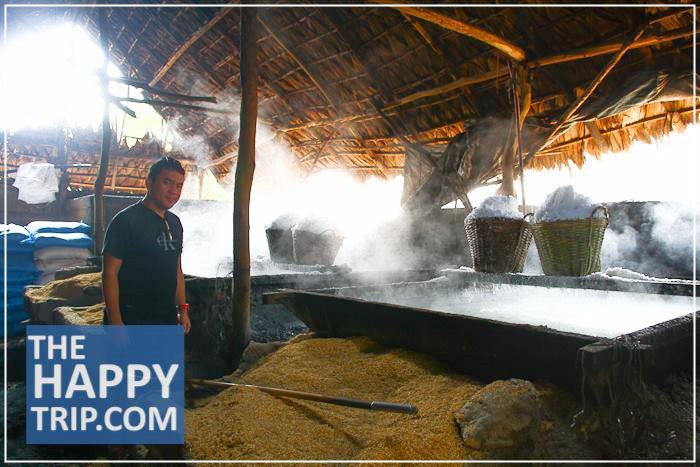
The Author trying the salt making. Pasuquin is known for their salt. Along the highway a few kilometers north of the town of Pasuquin, you will see stalls selling bags of what is said the finest salt in the Philippines.
Contents
Biscocho and Salt Making. That was our 3rd day in Ilocos, and this time, we’re heading Pagudpod.Along the way, we passed by to the biscocho of Ilocos and see the Salt Making cottage industry.
Immy, also a Happy Tripper who had visited Laoag months before reminded me of the Biscocho of Pasuquin. Immy expressed her love for their Biscocho and told me that they have two type of Biscocho, the hard or the typical Biscocho and the soft one.
The Pasuquin Bakery selling biscocho
We’ll I really love to eat, I love bread! That’s why I was quite excited to try these Biscocho.
I suppose that these biscochos were quite popular in the place as seen by the cars who stopped and buy bags and bags of bread. I get even more excited with those sights. But I was a bit disappointed (sorry Ilocos and Immy ). For me they were very ordinary. I still love the Biscocho of Iloilo and Bacolod.
the biscocho
SALT MAKING
Pasuquin is known for their salt. Along the highway a few kilometers north of the town of Pasuquin, you will see stalls selling bags of what is said the finest salt in the Philippines. It is a common sight to see people riding in provincial buses that often stop at these stalls to purchase salt. Sold by the kilo and contained in plastic bags, the salt is cooked in large vats in huts which are usually found behind the stalls.
Pasuquin salt makers use rice hulls when cooking salt.
In salt making, pipes are connected from the beach to the huts carry salt water to the cooking vats. They use salt crystals mixed in sea water and cook over fire to make salts. This process of salt making is quite different from the way salt is produced in other places where a thin layer of sea water is poured over salt beds and left to dry by exposure to the sun.
Pasuquin salt makers use rice hulls when cooking salt. In this cottage industry, entire families are engaged in salt making, carrying on the traditional livelihood of previous generations. Of course, I have to try what they were doing which the salt makers just allow.
The salt makers of Pasuquin improved their product by adding a small amount of iodine to plain salt to help reduce the chance of iodine deficiency. The conventional way of adding iodine to plain salt is done by using either potassium iodide or potassium iodate.
Read the rest of our trip by clicking the links below:
Yakimix SM City Bacolod Review Yakimix SM City Bacolod Review : Buffet Dining, Sushi Favorites,…
Holy Week Philippines 7 Places to Visit for Reflection, Relaxation, and Meaningful Travel | Holy…
Iloilo Culinary Tourism Guide Iloilo Culinary Tourism Guide: What to Eat, Where to Go, and…
Travel Insurance Guide Travel Insurance Guide: Planning Safer Trips With Confidence Travel opens the door…
How AI Lip Sync Helps Travelers Produce Consistent Content Faster During Traveling The challenge…
Holy Week in Negros Holy Week in Negros: Quiet Corners Where It Still Feels Like…