
Bacolod Food Tourism
Bacolod Food Tourism: Beyond UNESCO Recognition
Contents
How Bacolod and Negros Occidental Can Build a World-Class Gastronomy Destination Through Heritage, Storytelling, and Community
“Food is one of the few things that can tell the story of a people before a single word is spoken.”
Note:
This article was intentionally written as a policy-oriented tourism feature rather than a restaurant guide. The goal is not merely to celebrate Bacolod’s cuisine, but to encourage informed discussions on tourism governance, destination management, gastronomy tourism, sustainability, local economic development, and corporate social responsibility. It is offered as a contribution to the continuing conversation on how Bacolod can strengthen its position as one of the Philippines’ leading culinary destinations. – Jojo Vito,PhD
More Than Good Food [ Bacolod Food Tourism ]
Every city has good food.
Only a few become known because of it.
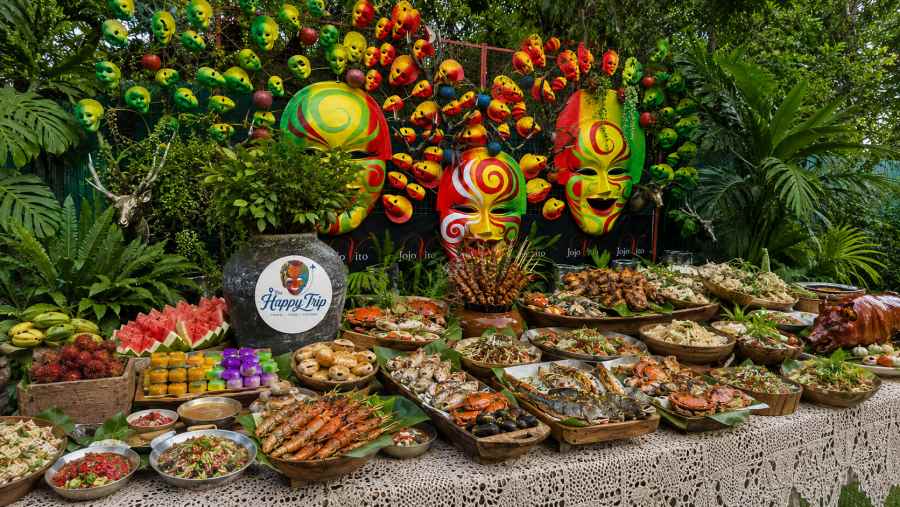
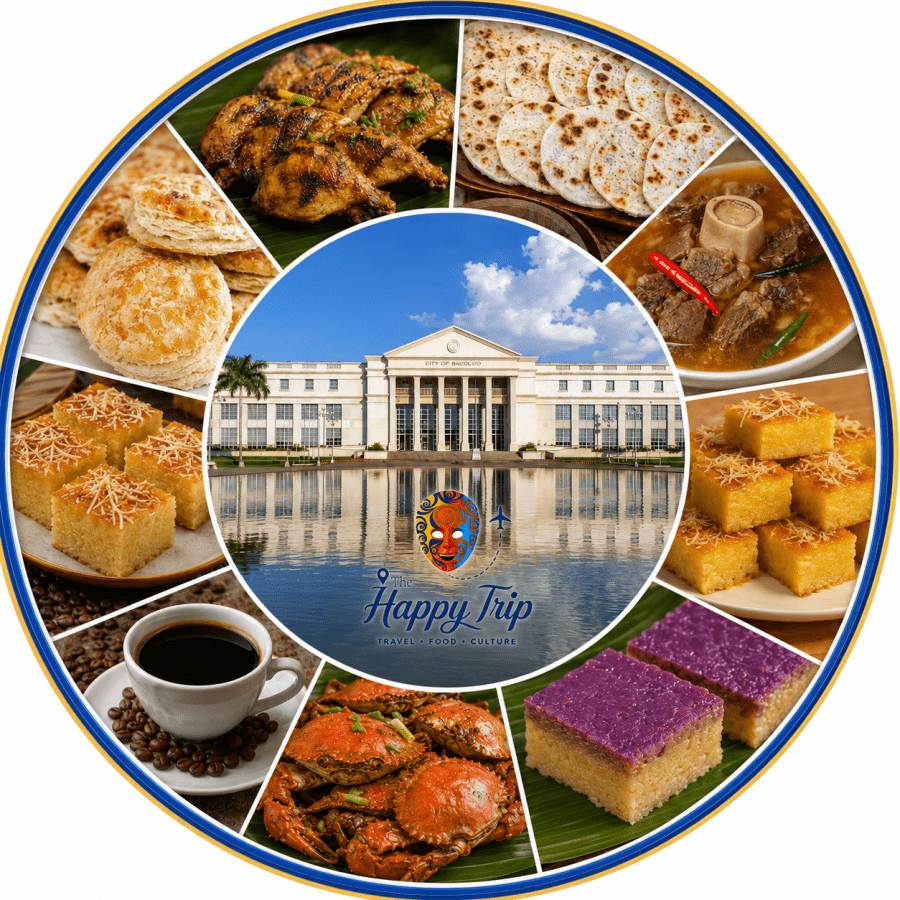
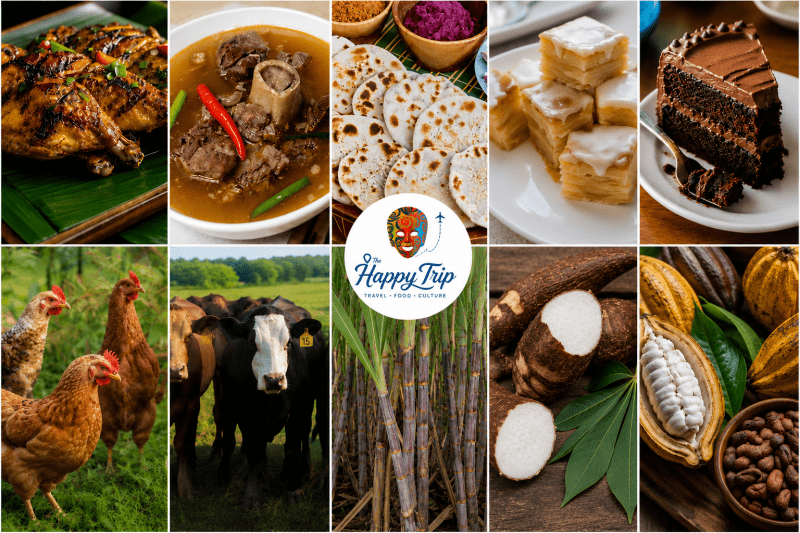
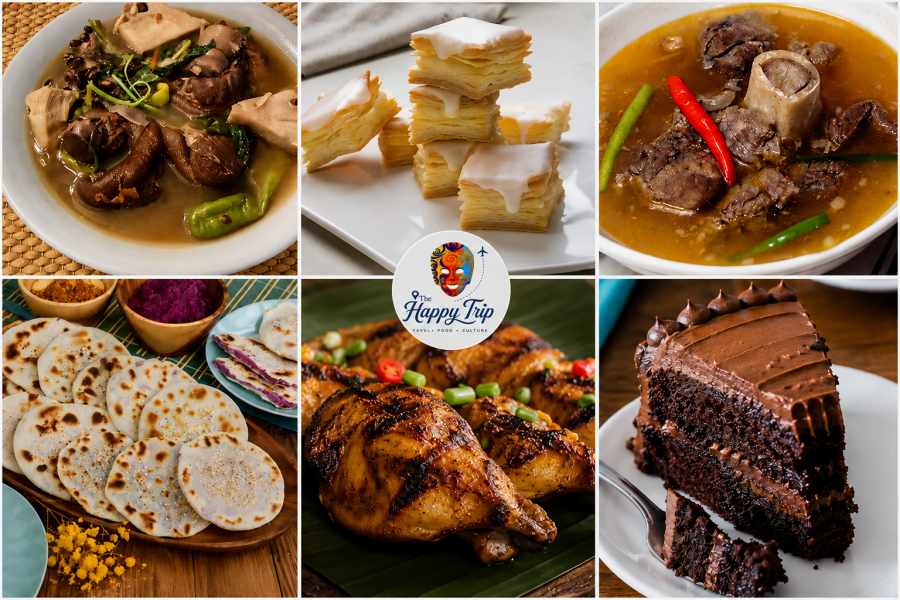
Across the Philippines, discussions about food almost always include Bacolod. Travelers speak enthusiastically about Chicken Inasal, Cansi, KBL (Kadyos, Baboy, at Langka), Piaya, Napoleones, fresh seafood, muscovado sugar, heirloom recipes, and the unmistakable warmth that accompanies every meal. Food writers consistently rank Bacolod among the country’s most satisfying culinary destinations, while visitors often leave with the impression that eating is not merely an activity in the city—it is part of its identity.
Yet a difficult question deserves to be asked.
If Bacolod is already one of the country’s most celebrated food cities, why has it not yet become the Philippines’ recognized gastronomy capital?
The question is not intended to diminish what Bacolod has achieved.
It is meant to challenge what Bacolod can still become.
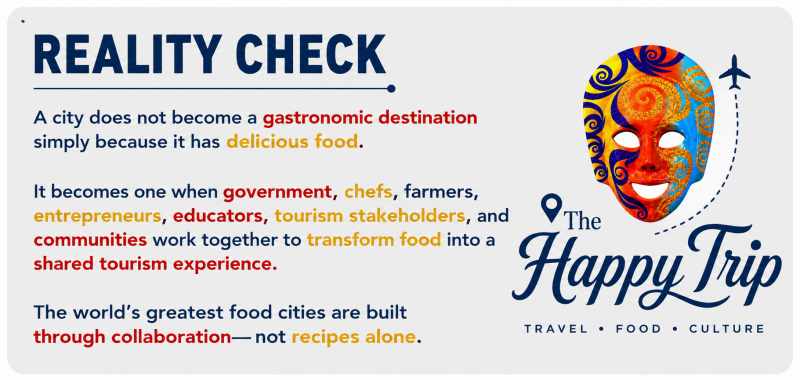
Because there is a significant difference between being known for good food and being recognized as a gastronomy destination.
One celebrates restaurants.
The other builds an ecosystem.
A Lesson from Iloilo
Whenever conversations about food tourism arise in Western Visayas, comparisons between Bacolod and Iloilo are almost inevitable.
Some debate which city has the better cuisine.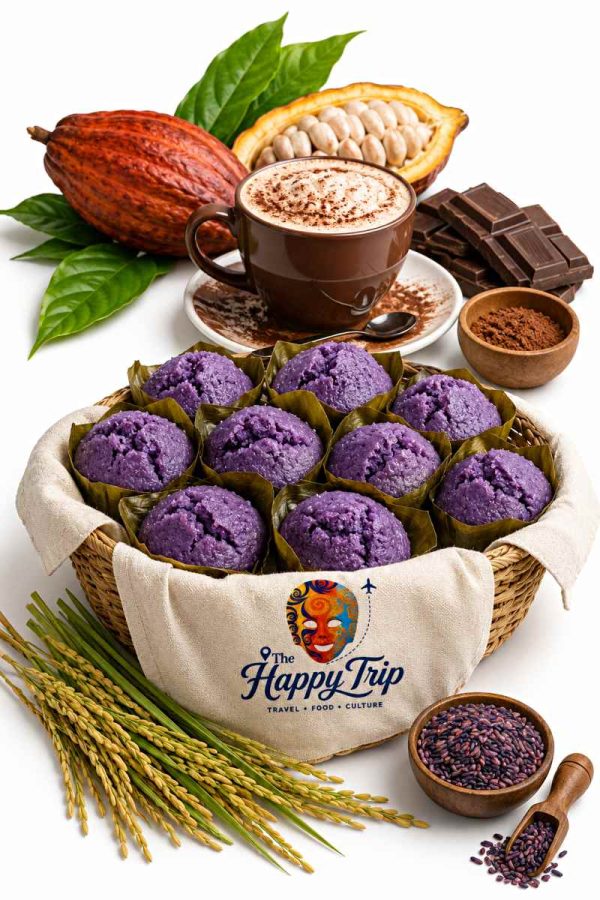
Others argue over Batchoy versus Chicken Inasal.
Pancit Molo versus Cansi.
Biscocho versus Piaya.
Perhaps those debates have distracted us from a far more important conversation.
In 2023, Iloilo City became the first city in the Philippines to be designated as a UNESCO Creative City of Gastronomy, joining an international network of cities that use food as a driver of sustainable development, creativity, cultural preservation, education, and community participation (UNESCO, 2023).
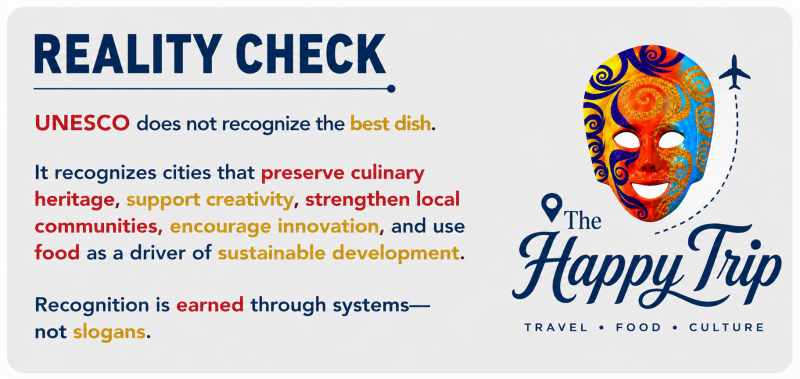
That recognition was not awarded because UNESCO concluded that Iloilo served the country’s best dishes.
UNESCO does not evaluate cities like restaurant critics.
It evaluates something much broader.
The UNESCO Creative Cities Network recognizes cities that demonstrate how gastronomy contributes to sustainable urban development through governance, cultural heritage, innovation, education, environmental responsibility, local enterprise, and community engagement (UNESCO, 2023).
In other words, UNESCO asks a different question.
Not,
“Who cooks the best food?”
But,
“Which city has built the strongest ecosystem around its culinary heritage?”
That distinction changes everything.
Great Food Is Only the Beginning [ Bacolod Food Tourism ]
For decades, tourism campaigns have promoted food primarily as an attraction.
Eat here.
Try this.
Taste that.
Discover local specialties.
These campaigns are effective.
They inspire travel.
But modern gastronomy tourism has evolved beyond restaurant recommendations.
According to UN Tourism, gastronomy has become a strategic tool for destination development because it strengthens local agriculture, supports small businesses, preserves cultural heritage, encourages innovation, creates employment, and improves community resilience (UN Tourism, 2024).
Food is no longer simply consumed.
It is experienced.
It tells stories.
It connects visitors with local communities.
It reflects history, geography, migration, agriculture, trade, and culture.
A single meal can reveal more about a destination than an entire museum.
This is why the world’s leading gastronomic destinations invest not only in chefs.
They invest in farmers.
Fishing communities.
Public markets.
Food entrepreneurs.
Universities.
Research.
Heritage conservation.
Food safety.
Training.
Creative industries.
Tourism marketing.
And governance.
Restaurants become the visible outcome of a much larger system.
Bacolod Already Has What Many Cities Want [ Bacolod Food Tourism ]
Bacolod begins this journey from a position of strength.
Few Philippine cities possess such a diverse culinary identity.
Chicken Inasal alone has become synonymous with Bacolod across the country.
Yet the city’s food story extends far beyond a single dish.
There is Cansi, whose rich broth reflects generations of Negrense cooking.
There are traditional heirloom recipes quietly preserved within families.
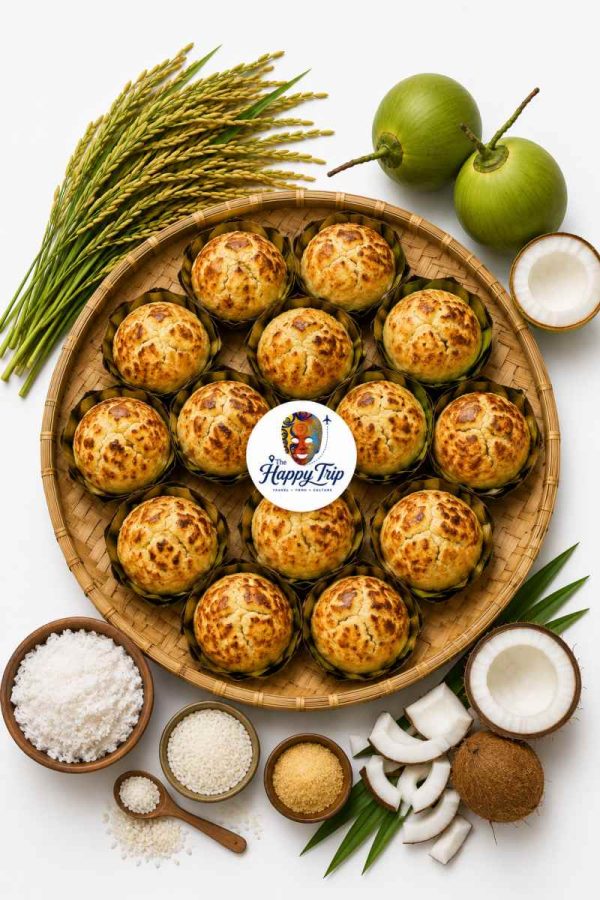
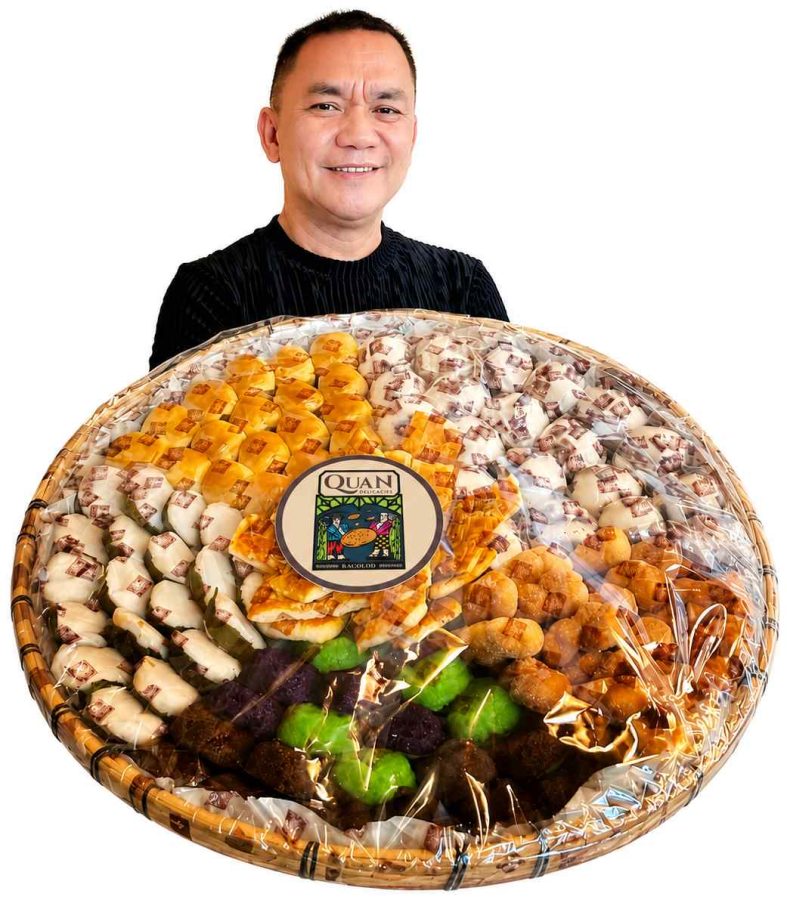
There are pastries that have become edible souvenirs.
There is seafood supplied by the surrounding coastal communities of Negros Occidental.
There is muscovado sugar that shaped the province’s history.
There is locally produced coffee steadily gaining recognition.
There is artisan chocolate.
There are public markets filled with ingredients that define Negrense cuisine.
Above all, there is hospitality.
Perhaps Bacolod’s greatest culinary asset is not merely what is served on the plate.
It is the culture surrounding the meal.
Meals are rarely rushed.
Guests are welcomed generously.
Food becomes conversation.
Conversation becomes friendship.
That is something no recipe can teach.
The Wrong Question
Perhaps the biggest mistake we have made is asking whether Bacolod has good food.
That question was answered years ago.
The more important question is this:
What is Bacolod doing to transform its culinary reputation into a sustainable tourism strategy?
These are not the same thing.
Many cities have excellent food.
Far fewer have comprehensive gastronomy policies.
Many cities organize food festivals.
Far fewer measure how those festivals influence visitor arrivals, hotel occupancy, restaurant revenues, local sourcing, or the livelihoods of farmers and food producers.
Many destinations promote signature dishes.
Far fewer build integrated food tourism systems.
The challenge for Bacolod is no longer proving that its cuisine deserves recognition.
The challenge is building the governance, partnerships, and long-term vision that allow its culinary identity to become one of its strongest tourism assets.
That journey begins not in the kitchen.
But in leadership.
What UNESCO Really Looks For—and What Bacolod Can Learn [ Bacolod Food Tourism ]
One of the biggest misconceptions about the UNESCO Creative Cities Network is that it is a competition to determine which city serves the best food.
It is not.
UNESCO does not rank recipes.
It does not judge restaurants.
It does not compare chefs.
In fact, a city may have extraordinary cuisine and still fail to qualify if it cannot demonstrate how food contributes to sustainable development, cultural preservation, education, creativity, community participation, and economic inclusion (UNESCO, 2023).
This is perhaps the most important lesson Bacolod can learn.
The road to becoming a recognized gastronomic destination is not paved with delicious meals alone.
It is built through governance.
Gastronomy Is an Ecosystem [ Bacolod Food Tourism ]
The word gastronomy is often mistaken for fine dining.
It is much broader than that.
According to UN Tourism, gastronomy encompasses the relationships among food, culture, heritage, agriculture, creativity, sustainability, education, entrepreneurship, and tourism. It connects producers and consumers, rural communities and urban centers, tradition and innovation (UN Tourism, 2024).
That means a gastronomic city is not measured by the number of restaurants it has.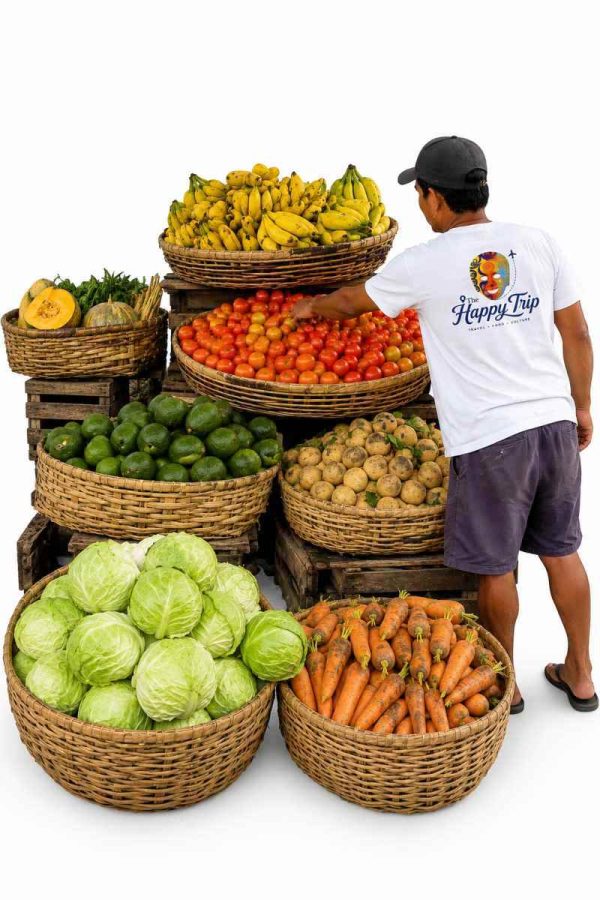
Instead, it asks questions such as:
How many local farmers supply the city’s restaurants?
How many traditional recipes are documented and preserved?
How are young chefs trained?
How are local ingredients promoted?
How are food entrepreneurs supported?
How are culinary traditions passed on to future generations?
How does tourism benefit local communities?
These are governance questions.
Not culinary ones.
What Iloilo Did Differently
Iloilo’s recognition as a UNESCO Creative City of Gastronomy did not happen overnight.
It was the result of years of preparation involving multiple stakeholders working toward a shared objective.
The City Government of Iloilo partnered with universities, chefs, historians, cultural workers, tourism organizations, private businesses, and national government agencies to prepare a comprehensive nomination that demonstrated not only the city’s culinary heritage but also its commitment to creativity, sustainability, education, and inclusive development (UNESCO, 2023).
Equally important, Iloilo documented its food traditions.
It invested in culinary research.
It strengthened collaborations between public and private institutions.
It highlighted local ingredients and traditional knowledge.
It demonstrated how food contributed to the city’s broader development agenda.
In other words, Iloilo did not simply promote food.
It built a system around food.
That distinction deserves careful attention.
Does Bacolod Have a Gastronomy Strategy? [ Bacolod Food Tourism ]
This question is not intended as criticism.
It is intended as an invitation.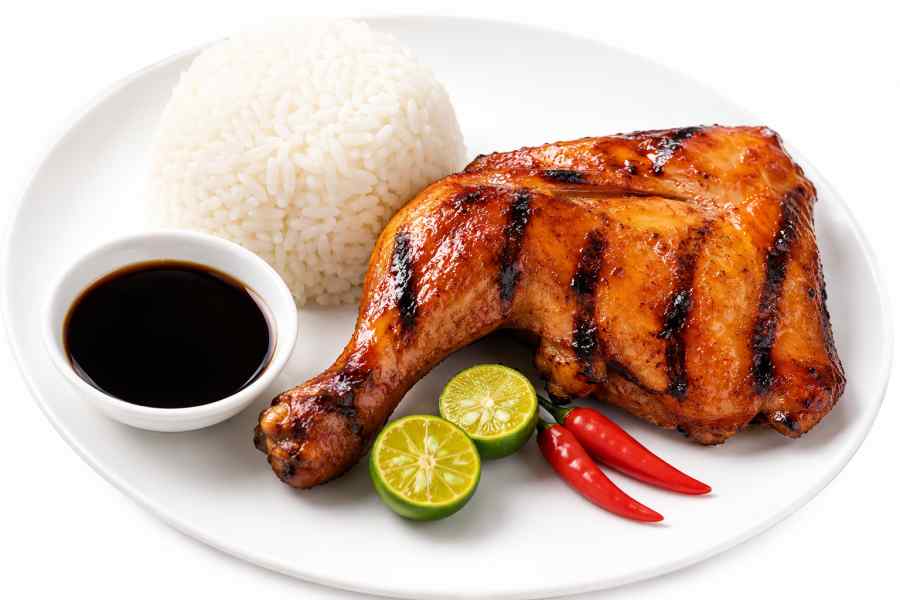
Bacolod has tourism plans.
Festival calendars.
Business events.
Restaurant promotions.
Food festivals.
Private culinary initiatives.
Individual success stories.
What remains less visible is whether these activities operate under a single long-term gastronomy strategy.
Is there a shared vision?
Is there a roadmap?
Is there a coordinated effort connecting tourism, agriculture, education, culture, public health, and business?
Or are excellent initiatives happening independently of one another?
Cities rarely become globally recognized because of isolated successes.
They succeed because many organizations move in the same direction.
Governance Beyond City Hall [ Bacolod Food Tourism ]
Governance is often misunderstood as something government does.
In reality, governance is about coordination.
It is the ability of different institutions to pursue common goals despite having different responsibilities.
If Bacolod truly aspires to become a leading gastronomic destination, governance must extend far beyond City Hall.
The City Government provides leadership, policy direction, tourism planning, infrastructure, and destination management.
The Provincial Government of Negros Occidental strengthens the agricultural and cultural systems that supply Bacolod’s culinary identity.
The Department of Tourism (DOT) supports destination promotion, product development, quality standards, and capacity building.
The Department of Trade and Industry (DTI) assists food entrepreneurs, product innovation, packaging, and market expansion.
The Department of Agriculture (DA) strengthens food production, local supply chains, and farmer support.
The Department of Science and Technology (DOST) contributes research, food innovation, packaging technology, and product development.
TESDA develops culinary and hospitality skills.
Universities document food heritage, conduct research, preserve traditional recipes, and develop future professionals.
Restaurants transform local ingredients into visitor experiences.
Hotels become ambassadors of local cuisine.
Media tells the story.
Travel writers inspire curiosity.
Communities preserve authenticity.
No single institution can build a gastronomic city.
But together, they can.
Where Is the Public? [ Bacolod Food Tourism ]
One question deserves greater attention.
How many ordinary Bacolodnons know that becoming a gastronomic destination requires their participation?
Most discussions about tourism occur inside conference rooms.
Planning workshops.
Government offices.
Business meetings.
Yet the people who preserve recipes, operate public markets, sell street food, cultivate ingredients, and welcome visitors are often absent from these conversations.
Tourism cannot succeed if it is designed only by institutions.
It must also be understood by communities.
Public awareness matters.
People support what they understand.
Perhaps Bacolod needs not only a gastronomy strategy.
Perhaps it also needs a public conversation about why food matters beyond restaurants.
Because every resident is, in some way, part of the visitor experience.
Marketing the City—or Marketing the Story? [ Bacolod Food Tourism ]
Tourism marketing often focuses on destinations.
Perhaps gastronomy marketing should focus more on stories.
Instead of simply promoting Chicken Inasal, we should also shine a light on the families, cooks, and grill masters who have perfected it over generations. The dish is already celebrated—but its story deserves equal emphasis.
Instead of merely promoting Cansi, why not tell also the story of the families and eateries that have preserved its distinctive flavor, along with its cultural roots in Negros?
Instead of just showcasing local desserts, why not share the story of muscovado sugar, the sugarcane industry, and the farming communities whose livelihoods shaped the island’s identity?
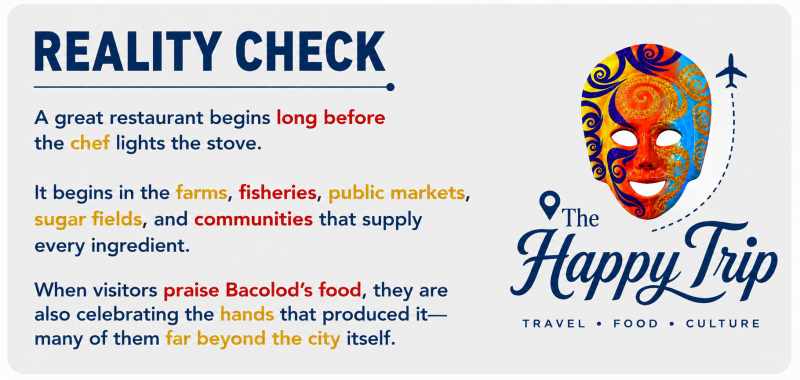
Instead of simply listing restaurants, why not introduce the farmers who grow the vegetables, the fisherfolk who harvest the seafood, the artisans who make the native delicacies, and the entrepreneurs who transform local ingredients into memorable dining experiences?
The food is already being promoted.
What deserves greater emphasis is the people behind the food.
Today’s travelers increasingly seek authenticity.
They want to know not only what they are eating.
They want to know where it came from, who prepared it, how it evolved, and why it matters.
The world’s leading gastronomic destinations do not simply market menus.
They market heritage, craftsmanship, tradition, and human stories.
Because long after visitors forget what was on the plate, they often remember the people who made the meal meaningful.
The Beginning of a Shared Vision [ Bacolod Food Tourism ]
Perhaps Bacolod does not need to ask whether it has enough good food.
It already does.
Perhaps the more important question is whether everyone involved—from government agencies and tourism organizations to universities, restaurants, producers, and ordinary citizens—is working toward the same destination.
Great gastronomic cities are never created accidentally.
They are built deliberately.
One partnership at a time.
One policy at a time.
One story at a time.
Bacolod’s Greatest Ingredient/Recipe Isn’t Chicken Inasal [ Bacolod Food Tourism ]
There is a common tendency to associate a city’s culinary identity with its most famous dish.
For Bacolod, that dish is undoubtedly Chicken Inasal.
Its smoky aroma has become synonymous with the city itself. Visitors arriving in Bacolod often have one item at the top of their itinerary before they even check into their hotel.
“Let’s eat Inasal.”
There is nothing wrong with that.
In fact, it is one of Bacolod’s greatest tourism successes.
But perhaps Chicken Inasal has also unintentionally narrowed the conversation.
Because Bacolod’s greatest culinary strength has never been a single dish.
Its greatest strength is something far more powerful.
Its location at the heart of one of the country’s richest food-producing provinces.
Bacolod’s Kitchen Extends Beyond the City [ Bacolod Food Tourism ]
One cannot truly understand Bacolod’s cuisine without looking beyond its city boundaries.
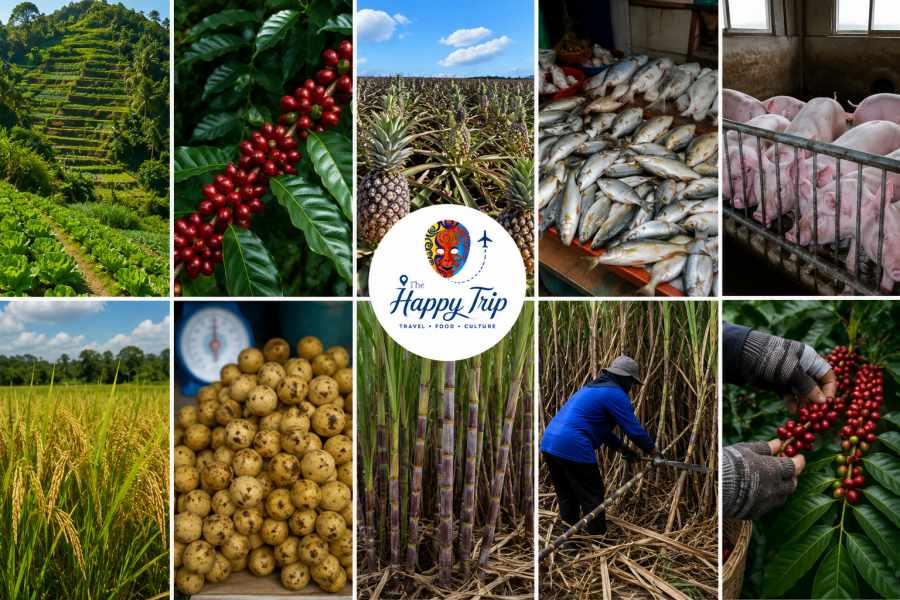
Every morning, before restaurants begin serving breakfast and before chefs prepare their first dishes, trucks quietly enter the city carrying vegetables, seafood, meat, fruits, sugar, coffee, and countless ingredients from across Negros Occidental.
Murcia supplies fresh vegetables and upland produce.
Bago contributes agricultural products and seafood.
The northern municipalities support fisheries and aquaculture.
Livestock comes from different parts of the province.
Coffee is steadily emerging from the upland communities.
Local cacao continues to gain recognition through artisan chocolate makers.
Muscovado sugar remains one of Negros’ defining products.
The public markets of Bacolod become the meeting point where much of this provincial abundance converges before reaching restaurants, hotels, cafés, and households.
This is why Bacolod’s food story is inseparable from Negros Occidental.
The city may serve the meal.
But the province helps grow it.
A Gastronomic Capital Needs More Than Restaurants [ Bacolod Food Tourism ]
One lesson repeatedly emphasized by UN Tourism is that gastronomy tourism begins with local value chains, not dining tables (UN Tourism, 2024).
Visitors rarely think about where their meal begins.
Yet every plate represents an economic network.
The farmer who cultivated the vegetables.
The fisher who went out before dawn.
The livestock raiser.
The food processor.
The delivery driver.
The public market vendor.
The restaurant.
The waiter.
The dishwasher.
The cashier.
Every meal creates livelihoods far beyond the dining room.
When tourism grows, these livelihoods should grow with it.
This is precisely where gastronomy intersects with Corporate Social Responsibility.
Responsible tourism is not simply about reducing plastic waste or conserving energy.
It is also about ensuring that tourism spending creates opportunities for local communities.
Should Restaurants Tell the Story Behind the Plate? [ Bacolod Food Tourism ]
Imagine walking into a restaurant in Bacolod.
Instead of simply reading
“Grilled Chicken Inasal.”
You read:
“Prepared using free-range chicken sourced from Negros Occidental, muscovado sugar produced locally, calamansi from nearby farms, and native vinegar made by local producers.”
The meal immediately becomes more meaningful.
The visitor understands that they are not merely eating lunch.
They are experiencing a local food system.
This practice is becoming increasingly common in internationally recognized gastronomic destinations.
Menus proudly identify local producers.
Chefs acknowledge farmers.
Restaurants celebrate seasonal ingredients.
Consumers become more aware of where food comes from.
The result is remarkable.
Visitors no longer remember only the taste.
They remember the story.
Could Bacolod encourage more establishments to tell these stories?
Perhaps not through regulation.
But through recognition.
Proudly Sourced from Negros [ Bacolod Food Tourism ]
One idea worth exploring is a voluntary recognition program.
Imagine restaurants displaying a simple seal near their entrance:
“Proudly Sourced from Negros.”
To receive the recognition, participating establishments would demonstrate that a significant portion of their ingredients comes from local producers whenever practical and sustainable.
The objective would not be to prohibit imported products.
That would neither be realistic nor desirable.
Instead, it would encourage stronger partnerships between restaurants and local farmers, fisherfolk, food processors, and small enterprises.
Such recognition would benefit everyone.
Restaurants strengthen their local identity.
Farmers gain more reliable markets.
Visitors gain authentic experiences.
The local economy retains more tourism spending.
This is not merely a tourism initiative.
It is local economic development.
Gastronomy Is Also Agricultural Policy
One of the most overlooked realities of food tourism is that successful culinary destinations depend on successful agriculture.
If farmers struggle…
Restaurants eventually struggle.
If fisheries decline…
Seafood tourism declines.
If food producers cannot remain profitable…
Local ingredients disappear.
Tourism therefore has a direct interest in the sustainability of agriculture.
Perhaps tourism planning and agricultural planning should no longer be viewed as separate conversations.
Perhaps they should become one conversation.
Imagine annual meetings where tourism officials, farmers’ organizations, restaurateurs, chefs, food manufacturers, market administrators, and tourism operators discuss common goals rather than separate concerns.
That is governance.
Not because one agency controls everyone.
But because everyone begins moving in the same direction.
Beyond Farm-to-Table [ Bacolod Food Tourism ]
The phrase farm-to-table has become increasingly popular in tourism.
It appears on restaurant menus.
Hotel advertisements.
Lifestyle magazines.
Yet its true meaning goes beyond marketing.
Farm-to-table is ultimately about shortening the distance between producer and consumer.
It encourages freshness.
Supports local agriculture.
Reduces transportation costs.
Strengthens community relationships.
And creates more resilient local economies.
For Bacolod, however, perhaps the concept should evolve further.
Not simply farm-to-table.
But Negros-to-Table.
A concept that celebrates the province as the city’s greatest culinary partner.
One that reminds visitors that every memorable meal in Bacolod represents the collective work of an entire province.
The Invisible Heroes of Tourism [ Bacolod Food Tourism ]
Tourists often remember chefs.
Food vloggers remember restaurants.
Media celebrates successful entrepreneurs.
Rarely do we celebrate the people whose work makes every meal possible.
The farmer harvesting vegetables before sunrise.
The fisherman returning to shore.
The vendor arranging fresh produce in the market.
The baker preparing bread before dawn.
The sugar worker continuing a tradition that helped shape the identity of Negros.
These individuals rarely appear in tourism campaigns.
Yet without them, there would be no gastronomy tourism.
Perhaps it is time to recognize them not simply as suppliers.
But as tourism stakeholders.
Because they are.
Looking Beyond the Plate [ Bacolod Food Tourism ]
If Bacolod aspires to become one of Asia’s respected food destinations, it must begin seeing food differently.
Not as an attraction.
Not as entertainment.
Not even as cuisine.
Food should be viewed as an integrated development strategy.
One that links agriculture, culture, tourism, education, entrepreneurship, public health, sustainability, and community well-being.
Only then does gastronomy become more than something visitors eat.
It becomes something a city lives.

Festivals Feed People—But Do They Build Tourism? [ Bacolod Food Tourism ]
Every successful tourism destination has its signature events.
Rio has Carnival.
Munich has Oktoberfest.
Japan celebrates cherry blossom season.
Singapore transformed its food culture into internationally recognized culinary festivals that attract visitors from around the world.
Festivals matter because they do something ordinary marketing cannot.
They create urgency.
People travel because an event is happening.
Hotels become fully booked.
Restaurants become busier.
Airlines experience increased demand.
Local businesses enjoy higher sales.
Media attention shifts toward the destination.
For a few days, an entire city becomes the story.
Bacolod understands this well.
For decades, festivals have become one of the city’s strongest tourism assets.
MassKara Festival remains one of the Philippines’ most recognizable celebrations.
Bacolaodiat has become an important cultural event that celebrates the city’s Chinese-Filipino heritage.
The Chicken Inasal Festival has begun carving its own identity by celebrating the dish that has become synonymous with Bacolod.
These festivals deserve recognition.
But perhaps another question deserves equal attention.
Are our festivals evolving into tourism products—or are they remaining primarily community celebrations?
The distinction matters.
Success Should Be Measured Differently [ Bacolod Food Tourism ]
When organizers declare a festival successful, the indicators are usually familiar.
Large crowds.
Busy streets.
Strong social media engagement.
Happy vendors.
Successful performances.
Those achievements are important.
But tourism requires another layer of evaluation.
A tourism festival should also ask:
How many visitors came from outside Bacolod?
How many stayed overnight?
How many hotel rooms were occupied because of the event?
How many airline passengers arrived specifically for the festival?
How much additional spending entered the local economy?
How many delegates extended their stay to visit other attractions?
How many returned because of the experience?
These are not simply marketing questions.
They are governance questions.
Without measuring tourism outcomes, it becomes difficult to determine whether a festival is generating economic growth—or merely redistributing local spending.
There is nothing wrong with local residents enjoying their own festivals.
In fact, community ownership is essential.
But if a festival is also expected to become a tourism driver, then it must be evaluated using tourism indicators as well.
The Chicken Inasal Festival [ Bacolod Food Tourism ]
Perhaps no festival illustrates this opportunity more clearly than the Chicken Inasal Festival.
The festival celebrates one of Bacolod’s most iconic culinary creations.
That alone gives it enormous potential.
Imagine hearing about Oktoberfest without associating it with Germany.
Or hearing about the Parma Ham Festival without thinking of Italy.
Food festivals become powerful because they strengthen the connection between place and product.
Chicken Inasal already belongs to Bacolod’s identity.
The challenge is transforming that identity into a compelling reason for people to travel.
Today, many Bacolodnons enthusiastically participate in the festival.
Restaurants become busy.
Residents celebrate.
Families gather.
That is worth celebrating.
But one difficult question remains.
How many people actually travel to Bacolod because of the Chicken Inasal Festival?
The answer matters.
Because attracting tourists requires a different strategy than serving local audiences.
If the objective is to position Bacolod as the country’s culinary capital, then the festival must gradually evolve beyond food stalls and entertainment.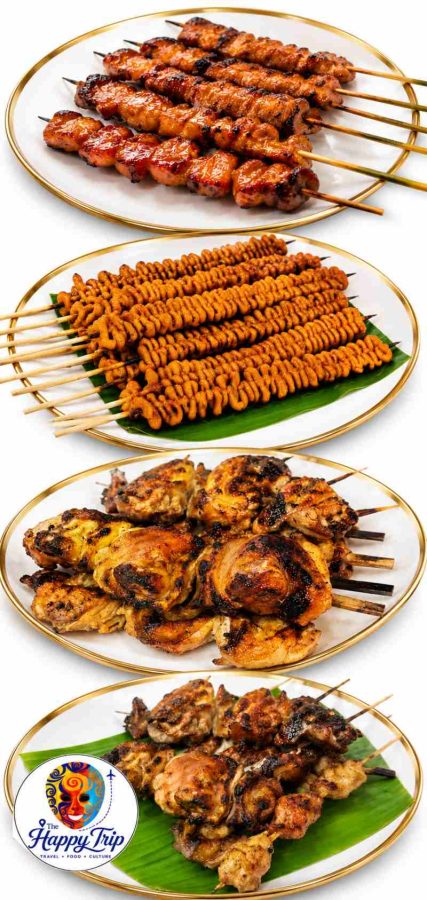
Imagine the possibilities.
An International Chicken Inasal Congress.
Chef competitions featuring interpretations of traditional Inasal.
Research presentations on Philippine food heritage.
Cooking masterclasses.
Farm visits showcasing poultry production.
Food photography workshops.
Restaurant Week.
Media familiarization tours.
Food writers from across Asia.
Travel influencers specializing in gastronomy.
Television food programs.
Airline promotional packages.
Hotel-and-festival bundles.
Cooking schools inviting international participants.
The festival would no longer simply celebrate Chicken Inasal.
It would position Bacolod as the country’s center for culinary learning and food innovation.
That is what globally recognized gastronomic cities do.
They transform festivals into economic platforms.
Bacolaodiat: A Story Waiting to Be Told Through Food
Among Bacolod’s most important cultural celebrations is Bacolaodiat, a festival honoring the city’s vibrant Filipino-Chinese community.
It is a reminder that Bacolod’s identity has been shaped not only by Negrense traditions but also by generations of Chinese-Filipino entrepreneurs, merchants, and families whose influence can still be seen in commerce, philanthropy, education, and cuisine.
The festival has successfully created a festive atmosphere.
Dragon dances.
Lanterns.
Cultural performances.
Fireworks.
Street celebrations.
Yet one observation invites thoughtful discussion.
Perhaps Bacolaodiat has not yet fully embraced its greatest culinary opportunity.
Visitors naturally expect that a celebration of Chinese heritage would also become an extraordinary celebration of Chinese-Filipino food.
Instead, much of the attention remains focused on performances and entertainment.
At Chopsticks Alley, where many visitors expect to discover a rich culinary experience, relatively few Chinese-inspired dishes are consistently highlighted.
Many visitors walk through the area.
Fewer linger to explore its culinary heritage.
This is not a criticism of the organizers.
Rather, it is an opportunity.
Imagine if Bacolaodiat became the Philippines’ premier Chinese-Filipino food festival.
Imagine heritage cooking demonstrations featuring recipes passed down through generations.
Fujian-inspired dishes interpreted through Negrense ingredients.
Traditional Chinese pastries.
Tea appreciation sessions.
Chinese noodle-making workshops.
Stories about how Chinese migration influenced Bacolod’s food culture.
Historical walking tours ending in heritage restaurants.
Collaboration among Chinese-Filipino families to preserve recipes that exist nowhere else.
Suddenly, Bacolaodiat becomes more than a cultural festival.
It becomes a culinary destination.
Culture is remembered.
Food makes it unforgettable.
Panaad: A Provincial Feast With Untapped Tourism Potential
Although held under the leadership of the Provincial Government of Negros Occidental, Panaad sa Negros Festival deserves attention because it demonstrates the extraordinary diversity of food across the province.
Every municipality proudly showcases its local products, delicacies, and traditions.
For many visitors, Panaad becomes their first opportunity to taste flavors from communities they may never have visited.
In that sense, it is one of the province’s greatest culinary classrooms.
Yet another conversation surfaces almost every year.
Food pricing.
Social media discussions frequently question why some festival food is priced similarly to meals served in established restaurants or hotels.
Whether every criticism is justified is not the point.
Perception matters.
Visitors arrive expecting festivals to make local cuisine accessible.
When affordability becomes a recurring topic of discussion, organizers may wish to examine not only vendor costs but also visitor expectations.
Affordable local food encourages experimentation.
Experimentation encourages exploration.
Exploration encourages spending.
And spending benefits more communities.
Perhaps future festivals should regularly measure not only attendance and vendor sales but also visitor satisfaction regarding food quality, pricing, authenticity, and overall culinary experience.
That information would be invaluable for future planning.
Festivals Should Create Travelers [ Bacolod Food Tourism ]
Perhaps the greatest shift Bacolod can make is changing how it views festivals.
Instead of asking,
“How many people attended?”
Perhaps the better question is,
“How many people traveled because of it?”
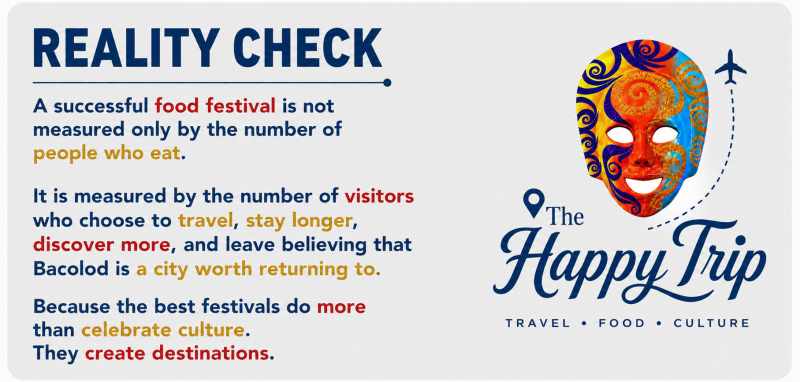
Attendance measures popularity.
Travel measures tourism.
The difference is significant.
One tells us how successful the celebration was.
The other tells us how successful the destination has become.
Street Food, Food Safety, and the Missing Food District [ Bacolod Food Tourism ]
Ask any seasoned traveler what they remember most about Bangkok.
Many will mention street food.
Ask someone about Singapore.
The conversation almost always includes Hawker Centres.
Taipei is famous for its night markets.
Penang’s identity is inseparable from its roadside food culture.
Osaka proudly calls itself Japan’s Kitchen, where some of the most memorable meals are found not inside luxury hotels but along bustling streets.
These cities did not become gastronomic destinations despite street food.
They became gastronomic destinations partly because of it.
Street food is often the most democratic expression of a city’s culinary identity.
It is affordable.
Accessible.
Authentic.
It reflects how ordinary people eat.
Visitors do not simply taste the food.
They experience the rhythm of everyday life.
Perhaps Bacolod has underestimated this opportunity.
The City’s Unsung Culinary Entrepreneurs [ Bacolod Food Tourism ]
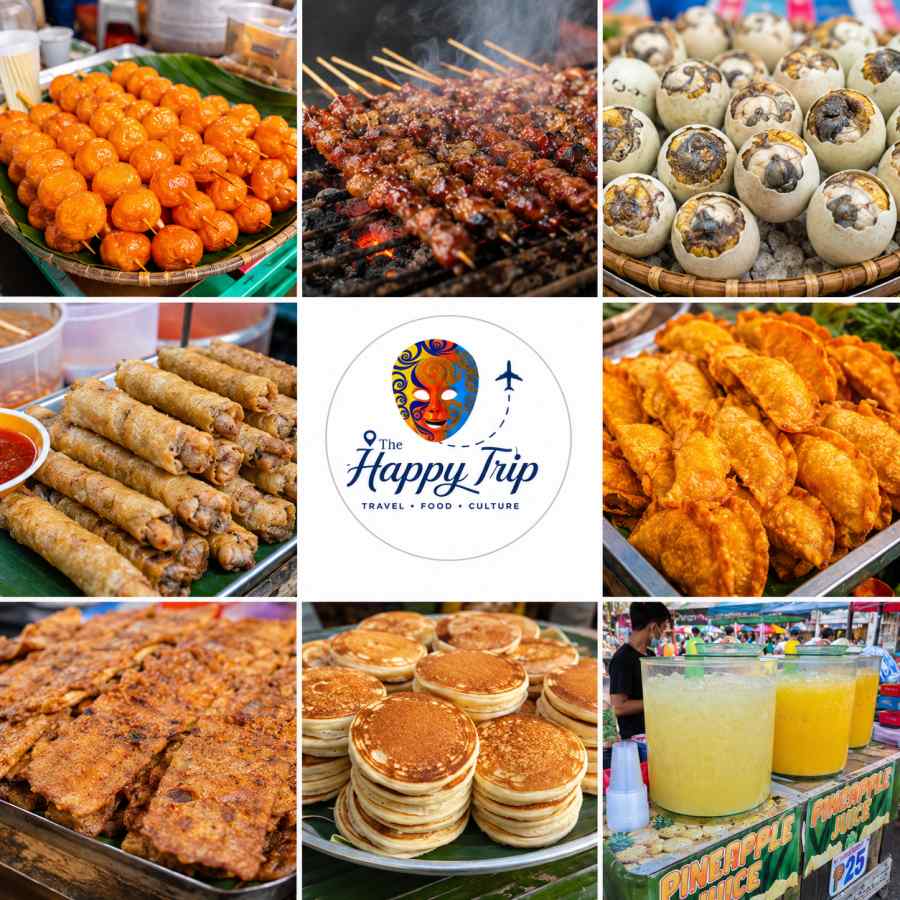
Across Bacolod, hundreds of micro food entrepreneurs quietly contribute to the local economy every single day.
Food carts.
Barbecue vendors.
Tempura stalls.
Kwek-kwek.
Batchoy.
Fresh lumpia.
Halo-halo.
Native delicacies.
Grilled seafood.
Barbecue stands.
Nighttime snack vendors.
These entrepreneurs rarely appear in tourism brochures.
Yet many visitors remember them just as vividly as established restaurants.
For some travelers, their first authentic meal is not served inside an air-conditioned dining room.
It is enjoyed while standing beside a food cart.
These vendors deserve more recognition.
Not simply because they provide affordable meals.
But because they represent entrepreneurship in its purest form.
Many are family-run businesses.
Some finance their children’s education.
Others preserve recipes that have been handed down for generations.
Street food is not merely commerce.
It is culture.
Opportunity Must Come With Responsibility [ Bacolod Food Tourism ]
Supporting street food, however, also requires acknowledging an equally important issue.
Food safety.
As Bacolod continues promoting itself as a culinary destination, visitors naturally expect that food sold in public spaces is prepared under safe and sanitary conditions.
The City Health Office conducts inspections and implements food safety regulations, particularly during major festivals and public events.
These efforts are essential.
But perhaps food safety should become more visible.
Not only enforced.
Seen.
A visitor cannot easily determine whether a street food vendor has completed food safety training.
Or whether ingredients have been properly stored.
Or whether sanitation standards are regularly monitored.
That uncertainty affects confidence.
Confidence influences purchasing decisions.
Purchasing decisions influence tourism.
This is not an argument for stricter enforcement alone.
It is an argument for greater transparency.
Imagine a “Bacolod Safe Street Food” Program [ Bacolod Food Tourism ]
Suppose every qualified street food vendor proudly displayed a simple certification.
Bacolod Safe Street Food
Certified vendors could receive:
Regular food safety training.
Visible identification.
Annual inspections.
Basic food handling education.
Digital QR codes linking customers to health certifications.
Recognition during city festivals.
Visitors would immediately recognize participating vendors.
Responsible entrepreneurs would receive public recognition.
Consumers would gain confidence.
The city would strengthen its culinary reputation.
Rather than viewing regulation as punishment, food safety becomes part of destination branding.
Everyone benefits.
From Informal Vendors to Tourism Ambassadors [ Bacolod Food Tourism ]
Many cities around the world have transformed street food vendors into respected tourism partners.
Singapore’s hawkers are internationally recognized as cultural bearers, with hawker culture inscribed on UNESCO’s Representative List of the Intangible Cultural Heritage of Humanity in 2020 (UNESCO, 2020).
Thailand has elevated street food into one of its strongest tourism assets.
Taiwan promotes night markets as essential visitor experiences.
These destinations did not eliminate street vendors.
They invested in them.
Training.
Organization.
Infrastructure.
Marketing.
Public health.
Branding.
Recognition.
Street food became part of the destination’s identity.
Could Bacolod do the same?
Perhaps the question is no longer whether street food belongs in tourism.
The real question is whether tourism has fully embraced street food.
The Missing Food District [ Bacolod Food Tourism ]
Perhaps the biggest missed opportunity is not a lack of restaurants.
It is the absence of a permanent culinary destination that belongs to everyone.
Today, visitors looking for Bacolod’s food scene often travel from one restaurant to another.
There is no single place where they can experience the diversity of Bacolod’s culinary identity in one visit.
Imagine if Bacolod developed a permanent Food District.
Not simply another food park.
Not another commercial development.
A destination.
A place where visitors immediately understand the city’s culinary identity.
Picture this.
Every evening.
Local coffee.
Artisan chocolate.
Chicken Inasal.
Cansi.
Chinese-Filipino specialties.
Seafood.
Traditional desserts.
Farm-to-table restaurants.
Weekend farmers’ markets.
Cooking demonstrations.
Young chefs experimenting with Negrense cuisine.
Live acoustic music.
Cultural performances.
Food photography workshops.
Small culinary museums.
Spaces where local entrepreneurs can test new concepts before investing in permanent restaurants.
Suddenly, food becomes an attraction rather than merely a necessity.
A Home for Microentrepreneurs [ Bacolod Food Tourism ]
One of the greatest strengths of a permanent food district is not tourism.
It is opportunity.
Many talented cooks never open restaurants because commercial rents are beyond their reach.
A city-supported food district could provide affordable spaces where small entrepreneurs can grow.
Some vendors would eventually become successful restaurants.
Others would remain beloved local institutions.
Everyone benefits.
Cities around the world increasingly use culinary incubators to help food businesses develop before entering larger markets.
Why should Bacolod not do the same?
Supporting microentrepreneurs is not charity.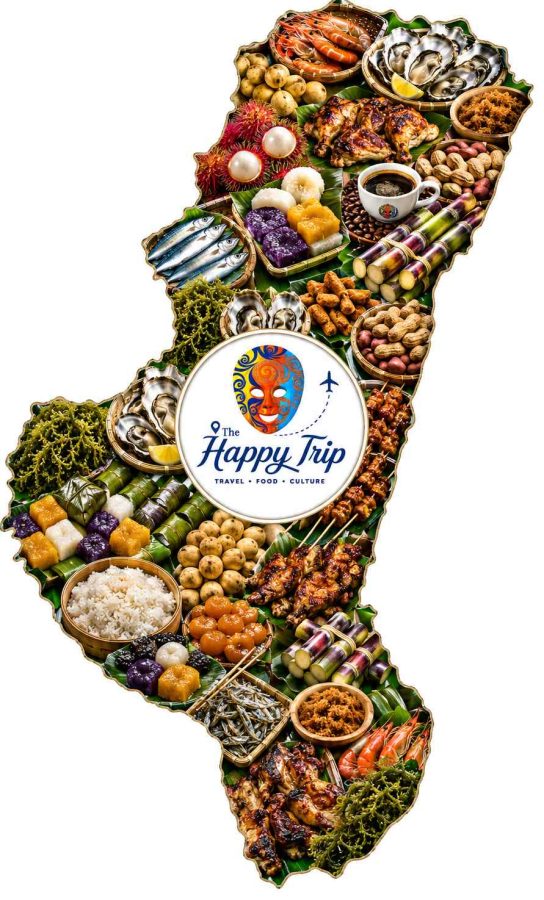
It is economic development.
Where Should It Be? [ Bacolod Food Tourism ]
The location deserves careful study.
Rather than creating another isolated attraction, the food district should complement existing tourism areas.
It should be easily accessible.
Walkable.
Safe.
Well-lit.
Supported by adequate parking and public transportation.
Connected to hotels.
Integrated with cultural attractions.
Perhaps near heritage districts.
Perhaps linked to the waterfront in future developments.
Perhaps beside an existing tourism corridor.
The important point is not where.
The important point is that the city begins discussing the possibility.
Great destinations rarely happen accidentally.
They begin with conversations.
Beyond Infrastructure [ Bacolod Food Tourism ]
Building a food district is not simply about constructing stalls.
Without careful planning, it risks becoming another place where vendors merely relocate.
The real objective should be to create an experience.
One that combines food.
Culture.
Education.
Creativity.
Community.
Tourism.
The world’s most memorable culinary districts succeed because they tell stories.
Every stall has a history.
Every dish has a heritage.
Every entrepreneur has a journey.
Visitors leave remembering not only what they ate.
But whom they met.
A Partnership Worth Building [ Bacolod Food Tourism ]
This is where governance becomes essential once again.
A permanent food district cannot be sustained by government alone.
Nor can it depend entirely on private investors.
Its success would require collaboration among the City Government, tourism stakeholders, private developers, food entrepreneurs, universities, health authorities, business organizations, cultural groups, and local communities.
Perhaps even the Provincial Government of Negros Occidental could participate by providing spaces for producers from across the province to showcase seasonal ingredients and local specialties.
In this way, Bacolod remains the stage.
Negros Occidental becomes the supporting cast.
Both succeed together.
From Recognition to Action [ Bacolod Food Tourism ]
The Governance, Marketing, and MICE Strategy Bacolod Needs
If Bacolod genuinely aspires to become one of the Philippines’ leading gastronomic destinations, another food festival alone will not be enough.
Another viral food video will not be enough.
Another restaurant opening will not be enough.
Even another award will not be enough.
The city has already proven that it can produce excellent food.
The next challenge is proving that it can organize an ecosystem around food.
Because great gastronomic cities are not accidental.
They are governed.
Tourism Needs a Master Recipe
One observation repeatedly surfaced while writing this article.
Bacolod has many excellent tourism initiatives.
Restaurants continue to innovate.
Hotels actively promote local cuisine.
Food entrepreneurs remain creative.
Private organizations organize events.
Government agencies conduct tourism programs.
Universities undertake research.
Yet these initiatives often appear to operate independently.
The city has many cooks.
What it needs is a shared recipe.
Perhaps the time has come to develop a Bacolod Gastronomy Tourism Master Plan—not merely another tourism plan, but a long-term strategy that integrates food, tourism, agriculture, heritage, culture, education, business development, and sustainability.
Such a plan should not belong exclusively to the City Government.
Neither should it belong solely to the tourism industry.
It should become a shared roadmap owned by everyone who contributes to Bacolod’s culinary identity.
Marketing the Destination—or Marketing the Experience? [ Bacolod Food Tourism ]
Tourism marketing has changed dramatically over the last decade.
Visitors no longer choose destinations solely because of brochures or television advertisements.
They travel because of experiences they discover online.
Food is one of the most photographed tourism products in the world.
Yet Bacolod’s marketing often remains focused on dishes.
Perhaps it should begin telling stories instead.
Imagine if every tourism campaign answered questions such as:
Who invented this recipe?
Where do the ingredients come from?
Which family has preserved this tradition?
Which community benefits when visitors order this dish?
How has this food shaped Bacolod’s history?
Food becomes far more memorable when visitors understand its story.
Cities no longer compete through attractions alone.
They compete through narratives.
Where Is Bacolod’s Gastronomy Brand?
One challenge facing Bacolod is that its culinary identity is already famous—but not yet fully organized.
Visitors know Chicken Inasal.
Many know Piaya.
Some recognize Cansi.
Others discover Napoleones.
But are these experiences presented under one unified gastronomic identity?
Imagine arriving at Bacolod-Silay Airport.
What immediately tells visitors they have entered one of the country’s great food cities?
Is there a culinary welcome center?
A food map?
Restaurant trails?
QR codes leading visitors to heritage food stories?
Digital guides introducing local producers?
Airport exhibits celebrating Bacolod’s culinary heritage?
Food destinations begin welcoming visitors long before they reach their first restaurant.
Measuring What Matters [ Bacolod Food Tourism ]
One of the recurring themes throughout this article has been measurement.
Tourism often celebrates activity.
Governance measures impact.
The difference is significant.
Instead of asking:
How many festivals did we organize?
Perhaps Bacolod should also ask:
How many visitors came because of food?
How many stayed an extra night?
How many visited another municipality after dining in Bacolod?
How many local farmers supplied tourism establishments?
How many restaurants purchased ingredients locally?
How many food entrepreneurs graduated from training programs?
How many culinary businesses expanded?
How much tourism spending remained within the local economy?
These indicators transform tourism from promotion into development.
Good governance measures outcomes.
Not merely activities.
MICE May Be Bacolod’s Missing Ingredient [ Bacolod Food Tourism ]
One of the most encouraging developments today is the renewed effort to strengthen Meetings, Incentives, Conferences, and Exhibitions (MICE) in Bacolod.
This deserves attention.
Not because MICE is new.
But because it represents a second opportunity.
Earlier attempts to organize the sector showed promise but never fully achieved sustained momentum.
The reasons may vary depending on whom one asks.
Perhaps stakeholder coordination weakened over time.
Perhaps industry participation became inconsistent.
Perhaps institutional support was insufficient.
Perhaps there was no long-term organization capable of sustaining the momentum.
Whatever the reasons, one reality remains.
The opportunity still exists.
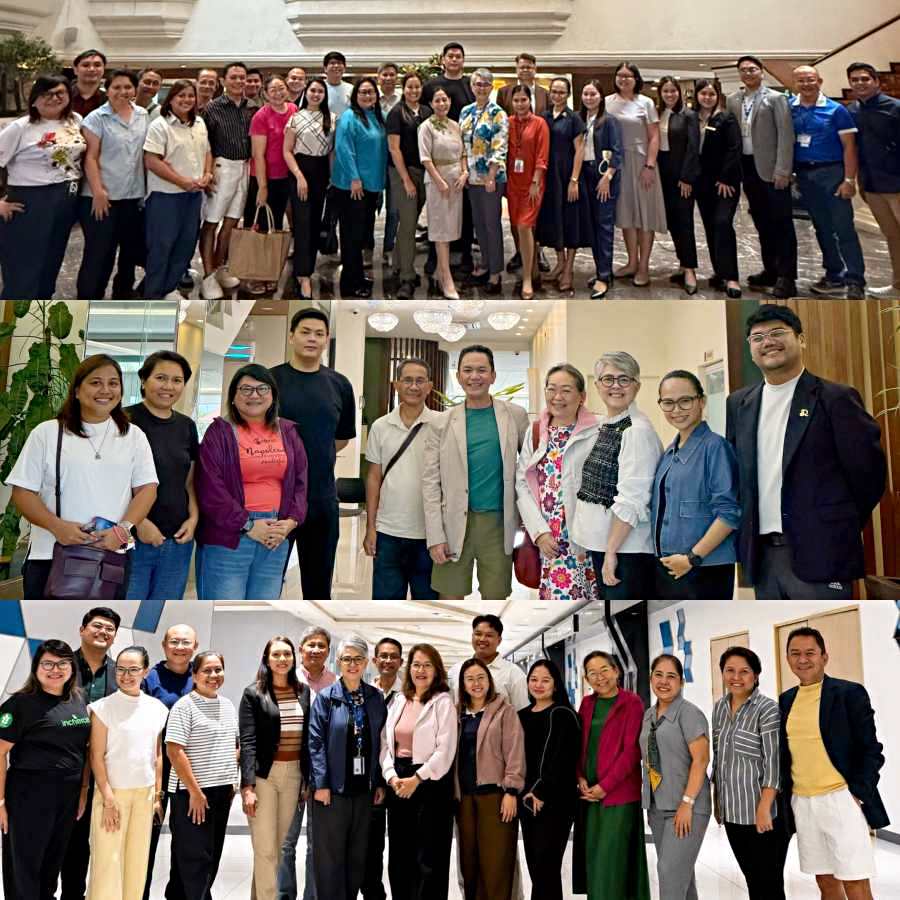
Today, tourism leaders, hotels, event organizers, private businesses, and other stakeholders are once again working to formalize Bacolod’s MICE sector.
This is an encouraging step.
Because business events should never be viewed merely as conferences.
They are tourism products.
Every conference delegate books accommodation.
Eats in restaurants.
Visits cafés.
Purchases souvenirs.
Uses transportation services.
Extends a vacation.
Invites family members to return.
Business travelers often become leisure travelers.
This phenomenon—commonly referred to as bleisure tourism—is increasingly recognized worldwide as a growing opportunity for destinations (UN Tourism, 2024).
Perhaps Bacolod should not simply ask how many conventions it can host.
Perhaps it should ask how every convention can become a culinary journey.
Every Conference Should Taste Like Bacolod [ Bacolod Food Tourism ]
Imagine attending a three-day convention in Bacolod.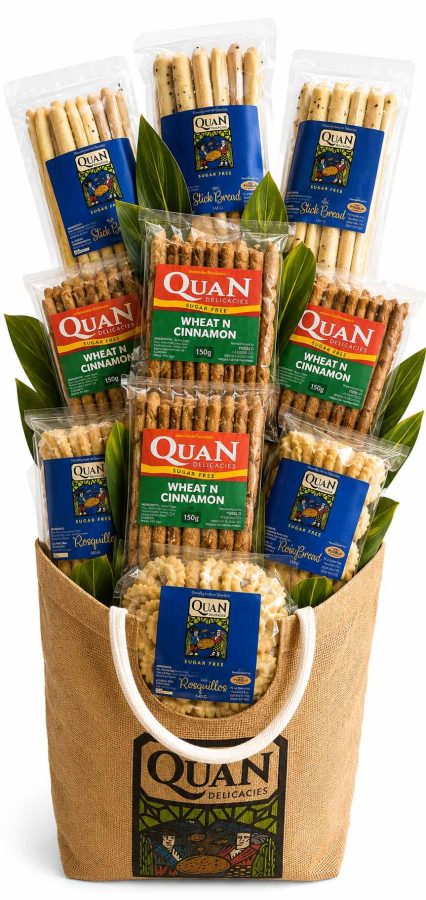
Instead of generic coffee breaks…
Delegates are introduced to local tablea chocolate.
Freshly brewed Negros coffee.
Piaya prepared by local producers.
Native delicacies from across the province.
Lunches featuring heritage recipes.
Cooking demonstrations after conference sessions.
Optional culinary walking tours.
Visits to public markets.
Restaurant passports encouraging delegates to explore local establishments.
Cooking classes.
Farm visits.
Chocolate makers.
Coffee producers.
Suddenly…
The conference no longer ends when the final speaker finishes.
It continues across the city.
MICE becomes tourism.
Tourism becomes local economic development.
Everyone Has a Seat at the Table [ Bacolod Food Tourism ]
Building a gastronomic destination requires leadership.
But leadership alone is insufficient.
Everyone must understand their role.
The City Government of Bacolod should lead destination planning, branding, public infrastructure, visitor experience, business facilitation, and policy development.
The Provincial Government of Negros Occidental remains an indispensable partner because Bacolod’s restaurants depend heavily on the province’s agricultural, fisheries, livestock, and cultural resources. Bacolod may be the gateway, but its culinary story is impossible to tell without Negros Occidental.
The Department of Tourism (DOT) can strengthen destination promotion, product development, quality standards, and international positioning.
The Tourism Promotions Board (TPB) can assist in promoting Bacolod through domestic and international tourism campaigns, convention bids, and strategic marketing.
The Department of Trade and Industry (DTI) can help food entrepreneurs improve product development, branding, packaging, and export readiness.
The Department of Agriculture (DA) ensures that tourism growth benefits local producers through stronger farm-to-market linkages.
The Department of Science and Technology (DOST) can continue supporting food innovation, packaging technology, and product quality.
TESDA develops the chefs, bakers, hospitality workers, and food service professionals who sustain the industry.
Universities—including those in Bacolod—should become active partners in documenting culinary heritage, conducting tourism research, measuring visitor satisfaction, studying festival impacts, and developing innovative food products.
Hotels.
Restaurants.
Food entrepreneurs.
Travel agencies.
Tour operators.
Shopping malls.
Market vendors.
Creative industries.
Media organizations.
Travel bloggers.
Content creators.
Residents.
Every stakeholder has a seat at the table.
From Individual Success to Collective Success [ Bacolod Food Tourism ]
Perhaps this is the greatest challenge facing Bacolod.
The city has many successful restaurants.
Many successful chefs.
Many successful entrepreneurs.
Many successful festivals.
Many successful tourism businesses.
The next step is ensuring these individual successes contribute to one shared destination brand.
Great gastronomic cities are not defined by isolated excellence.
They are defined by coordinated excellence.
When everyone succeeds together…
The city succeeds.
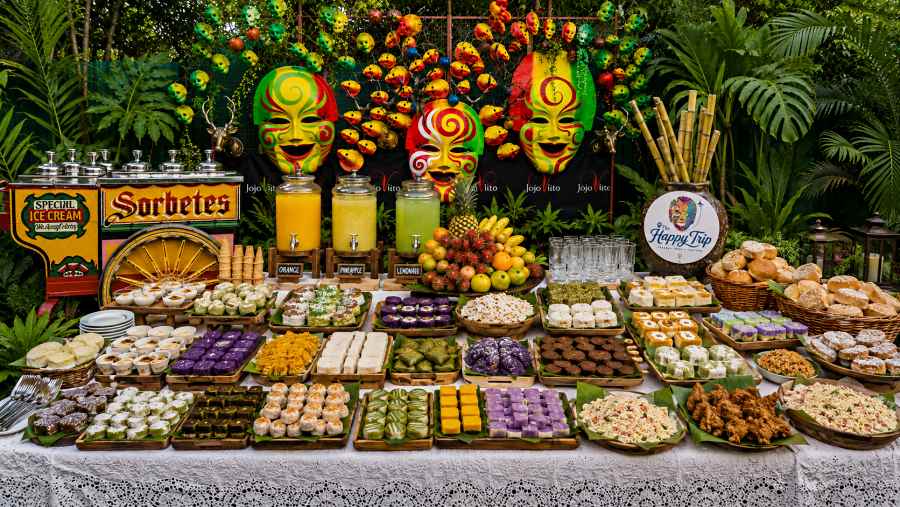
The Gastronomy Capital We Have Yet to Become
Throughout this article, one message has quietly emerged.
Bacolod does not lack good food.
It does not lack talented chefs.
It does not lack passionate entrepreneurs.
It does not lack rich culinary traditions.
Nor does it lack visitors eager to experience its cuisine.
The challenge has never been about flavor.
The challenge has always been about vision.
Great gastronomic cities are not remembered because they serve extraordinary meals.
They are remembered because they transform food into identity.
Into policy.
Into education.
Into culture.
Into community.
Into economic opportunity.
Into tourism.
That is the opportunity now before Bacolod.
Beyond a Tourism Campaign
Perhaps one day Bacolod will apply to become a UNESCO Creative City of Gastronomy.
Perhaps it will not.
Either way, UNESCO should never be the destination.
It should merely become the benchmark.
The real objective is far more important.
To become a city where food strengthens communities.
Supports farmers.
Encourages entrepreneurs.
Preserves heritage.
Creates employment.
Builds pride.
And attracts visitors because the city’s culinary story is authentic.
Recognition follows cities that have already transformed themselves.
Awards rarely create transformation.
They acknowledge it.
What Should Happen Next? [ Bacolod Food Tourism ]
If this article has one purpose, it is not to criticize.
It is to begin a conversation.
Every meaningful transformation begins with questions.
Perhaps Bacolod should begin asking itself:
Should the city develop a Bacolod Gastronomy Tourism Master Plan?
Should there be a permanent Bacolod Gastronomy Council composed of representatives from government, tourism, hospitality, agriculture, education, business, creative industries, and local communities?
Should every major tourism event measure not only attendance but also hotel occupancy, visitor origin, tourist spending, media reach, and economic impact?
Should local sourcing become a recognized tourism standard?
Should outstanding restaurants, farmers, food producers, and tourism partners receive annual recognition for sustainability, innovation, and community impact?
Should culinary heritage become part of tourism education in schools and universities?
Should visitors leave Bacolod knowing not only what they ate—but why it matters?
These questions have no simple answers.
But they deserve discussion.
From Festivals to Year-Round Tourism [ Bacolod Food Tourism ]
One realization became increasingly clear while writing this article.
Bacolod has never struggled to organize festivals.
The city excels at celebrations.
The next challenge is ensuring that every festival contributes to a larger tourism strategy.
MassKara.
Bacolaodiat.
Chicken Inasal Festival.
Each has its own identity.
Each attracts its own audience.
Perhaps the next chapter is not making these festivals bigger.
Perhaps it is making them work together.
Imagine an annual Bacolod Culinary Calendar, where every month offers a unique food experience.
Restaurant Week.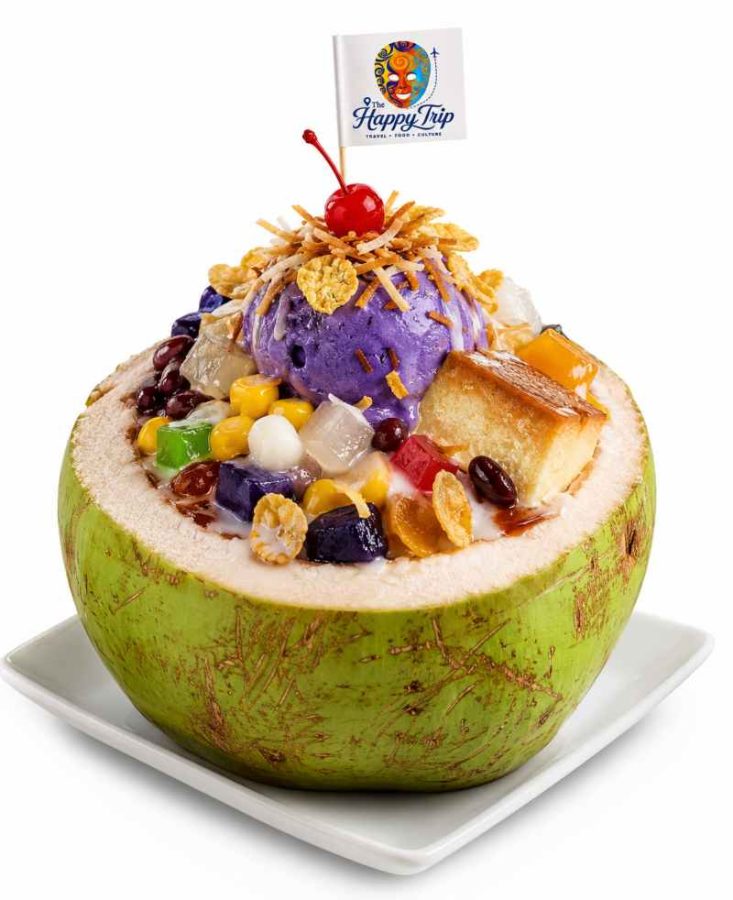
Coffee Month.
Chocolate Festival.
Seafood Week.
Chinese Heritage Cuisine Month.
Sugar Heritage Week.
Farm-to-Table Weekend.
Chef Exchange Program.
Food Photography Festival.
University Culinary Research Conference.
Cooking Competitions.
Market Tours.
Public Food Talks.
International Gastronomy Summit.
Instead of concentrating attention on a few weeks each year, Bacolod could cultivate a year-round culinary identity.
Tourism would no longer become seasonal.
It would become continuous.
The Measure of Success
One day, perhaps someone will ask:
Did Bacolod become the Gastronomy Capital of the Philippines?
The answer should never depend on a title.
Nor on an award.
Nor on a marketing campaign.
Instead, perhaps we should ask:
Did more farmers benefit from tourism?
Did more young chefs choose to build careers in Bacolod?
Did more local products find their way into hotel kitchens?
Did more visitors stay an extra day because of food?
Did more entrepreneurs succeed?
Did more heritage recipes survive?
Did tourism create opportunities that remained long after visitors returned home?
If the answer to those questions is yes…
Then Bacolod has already succeeded.
Whether anyone gives it a title or not.
A Personal Reflection
As someone who has spent years traveling across the Philippines and beyond, I have visited destinations celebrated for their architecture, landscapes, festivals, and luxury accommodations.
Yet the places I remember most vividly are often the ones where food became a conversation.
Where a chef proudly introduced a local farmer.
Where a grandmother explained the history behind a family recipe.
Where a public market revealed more about a community than any museum.
Where a simple meal became an invitation to understand a place more deeply.
Food has a remarkable ability to connect people.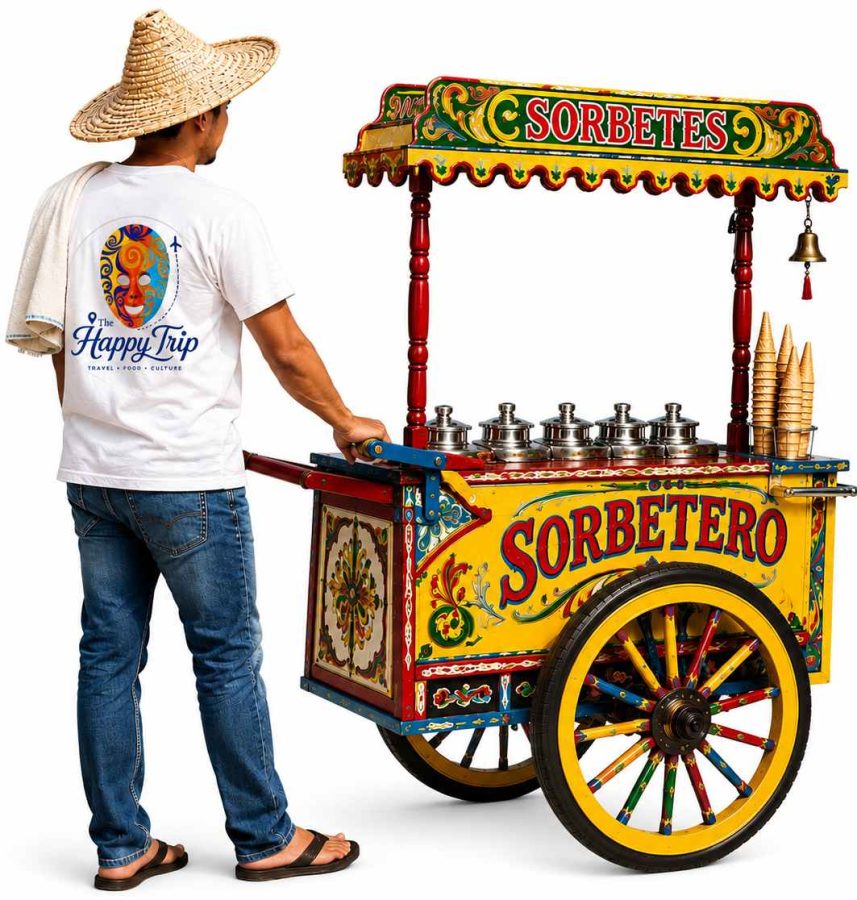
It crosses languages.
Cultures.
Generations.
Economic backgrounds.
And beliefs.
Perhaps that is why gastronomy is one of tourism’s most powerful tools.
It reminds us that every destination has a story.
Sometimes…
that story is served on a plate.
A Challenge to Every Stakeholder [ Bacolod Food Tourism ]
If Bacolod truly believes food is one of its greatest strengths…
Then food can no longer belong only to restaurants.
It must belong to tourism.
To agriculture.
To education.
To culture.
To business.
To governance.
To communities.
To every citizen who proudly recommends a favorite local eatery.
Because becoming a gastronomic destination is not the responsibility of government alone.
Nor chefs.
Nor hotels.
Nor tourism officers.
It is a shared responsibility.
Just like every memorable meal is the result of many hands working together.
The Last Word
Perhaps Bacolod does not need another signature dish.
Perhaps it needs a shared recipe.
One where government provides leadership.
Businesses provide innovation.
Farmers provide the harvest.
Fishers provide the day’s catch.
Chefs provide creativity.
Universities provide research.
Tourism provides direction.
Communities preserve tradition.
And every Bacolodnon becomes an ambassador of the city’s table.
Because great gastronomic cities are never built inside kitchens alone.
They are built by communities that understand that food is not merely something people eat.
It is one of the most powerful stories a city can ever tell.
And perhaps…
that story has only just begun.
References
- Gehl, J. (2010). Cities for People. Island Press.
- Porter, M. E., & Kramer, M. R. (2011). Creating Shared Value. Harvard Business Review, 89(1–2), 62–77.
- Speck, J. (2018). Walkable City Rules: 101 Steps to Making Better Places. Island Press.
- United Nations Educational, Scientific and Cultural Organization. (2023). Iloilo City joins the UNESCO Creative Cities Network as a Creative City of Gastronomy. https://www.unesco.org/en/creative-cities/iloilo-city
- United Nations Tourism. (2024). Gastronomy Tourism. https://www.unwto.org/gastronomy
- United Nations Tourism. (2024). Tourism for Sustainable Development. https://www.unwto.org/tourism4sdgs
- United Nations Educational, Scientific and Cultural Organization. (2020). Hawker Culture in Singapore. https://ich.unesco.org/en/RL/hawker-culture-in-singapore-community-dining-and-culinary-practices-in-a-multicultural-urban-context-01568
- Department of Tourism. (2023). National Tourism Development Plan 2023–2028. https://beta.tourism.gov.ph
- Department of Trade and Industry. One Town, One Product (OTOP) Philippines. https://www.dti.gov.ph
- Department of Agriculture. Programs and Services. https://www.da.gov.ph
- Department of Science and Technology – Food and Nutrition Research Institute. https://fnri.dost.gov.ph
- Tourism Promotions Board Philippines. https://beta.tpb.gov.ph
- World Food Travel Association. Food Travel Research and Resources. https://worldfoodtravel.org
- Global Sustainable Tourism Council. GSTC Destination Criteria. https://www.gstcouncil.org/gstc-criteria
More Stories
- Sustainable Tourism in the Philippines: Lessons from Coron and Beyond
- PLAZA DE MASSKARA AT THE UPPER EAST
- Belmont Hotel Iloilo: My Honest Stay & Travel Guide (2026)
- Luk Foo Palace Bacolod: Where Great Food Brings Family & Friends Together
- Guimaras Tourism Is Growing Up: A Repeat Visitor’s Honest View
- Responsible Travel: Helping the Places That Welcome Us
- How Local Art, Food, and Music Became the New Travel Luxury
- Best Places to Beat the Heat in Negros + Things to Do
- Travel Up Close: Discovering Hidden Beauty with a Pocket Microscope Camera
- Stay Active While Traveling | Fun Ways
- Yakimix SM City Bacolod Review (2026)
- Holy Week Philippines: 7 Travel Destinations for Reflection & Relaxation
- Iloilo Culinary Tourism Guide | What to Eat and Where to Go
- Travel Insurance Guide: Planning Safer Trips

This is a very insightful article because it looks at Bacolod’s food tourism from a much bigger perspective. We already know that Bacolod has great food, but I agree that being known for Chicken Inasal, Cansi, Piaya, and other local specialties is only the beginning. What really stood out to me is the idea that gastronomy should involve more than restaurants—it should also benefit our farmers, food entrepreneurs, communities, schools, and local businesses. I also like the point that Bacolod should focus more on the stories behind our food and the people who make it possible. We have so much culinary heritage in Bacolod and Negros Occidental, but we need better coordination and a long-term strategy to turn that heritage into sustainable tourism. For me, the goal should not simply be to get a UNESCO title. The real success would be seeing more visitors come to Bacolod because of our food, staying longer, supporting local businesses and farmers, and leaving with a deeper appreciation of our culture. Bacolod already has the ingredients; what we need now is a shared vision and a clear strategy to put everything together.
Question 1: Can Gastronomy Become a Public Policy Rather Than Merely a Tourism Product?
Yes, I believe gastronomy can and should be treated as a public policy rather than just a tourism product. Food is more than something that attracts visitors it reflects a country’s culture, history, traditions, and way of life. It also plays an important role in agriculture, public health, education, environmental sustainability, and the local economy. Looking at gastronomy only as a tourism attraction overlooks its wider impact on society.
By making gastronomy part of public policy, governments can support local farmers, preserve traditional recipes and cooking methods, promote healthy eating, encourage sustainable farming, and improve culinary education. These initiatives can also boost farmers’ morale by recognizing the important role they play in preserving the country’s culture while improving their economic opportunities and livelihoods. At the same time, these efforts help protect a nation’s cultural identity, create jobs, and strengthen local businesses. As a result, tourism naturally benefits because visitors are able to experience authentic local food and culture. In this way, tourism becomes a positive outcome of good public policy rather than its main purpose.
Question 2: Should International Recognition Such as UNESCO Drive Tourism Policy, or Should It Merely Validate Effective Governance Already in Place?
I believe international recognition, such as a UNESCO designation, should be the result of good governance rather than the main reason for creating tourism policies. Governments should first focus on protecting their cultural and natural heritage, supporting local communities, and ensuring that tourism is managed in a sustainable way. When these efforts are successful, international recognition becomes a meaningful acknowledgment of the work that has already been done.
If governments focus too much on earning international recognition, they may overlook the real needs of local communities or prioritize prestige over preservation. This could lead to problems such as overcrowding, environmental damage, or the commercialization of cultural traditions. Instead, UNESCO recognition should be viewed as an opportunity to strengthen existing conservation efforts, attract responsible tourists, and encourage continued investment in protecting heritage sites. It should also inspire governments to maintain high standards in preserving their cultural and natural resources rather than treating the recognition as the final achievement.
In the end, effective governance should always come first. International recognition is valuable, but it should serve as a reward for responsible and sustainable tourism practices, not the main goal. By putting people, culture, and sustainability first, governments can create tourism policies that benefit local communities, protect national heritage, and ensure that future generations can continue to enjoy these valuable resources.