Contents
The 2026 Asian Games will bring athletes, officials, and visitors from across Asia to Aichi-Nagoya, Japan, creating an opportunity to experience much more than the competitions themselves.
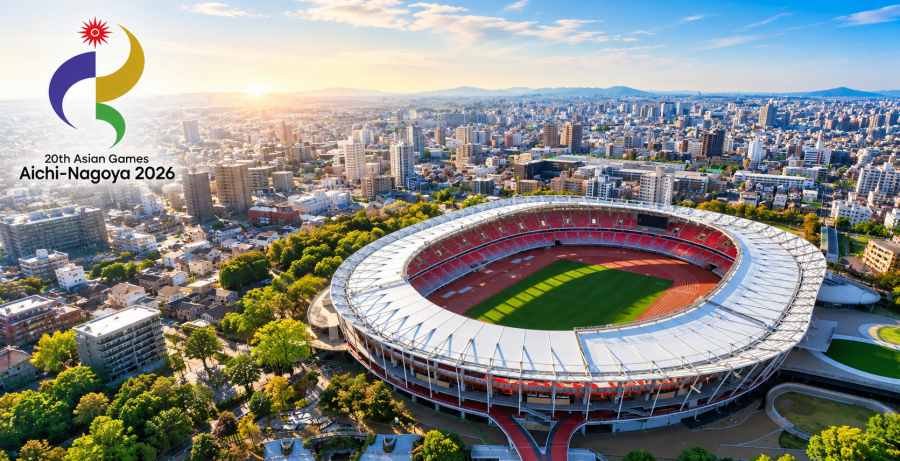
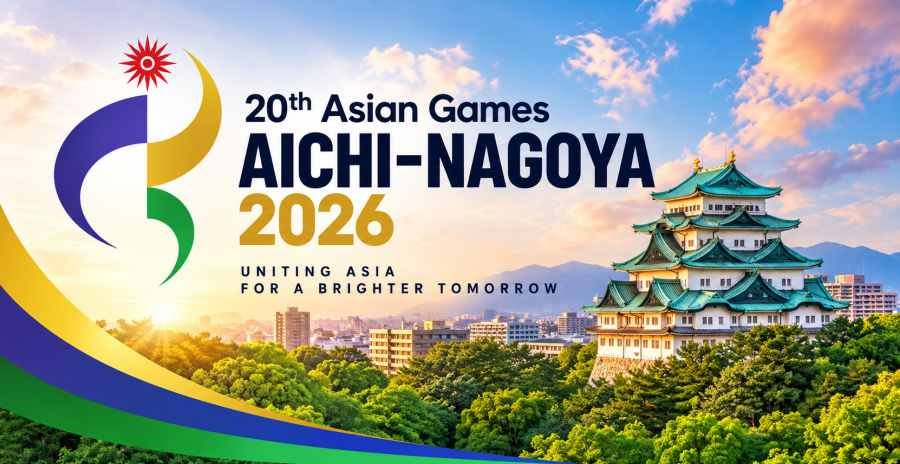
The 20th Asian Games Aichi-Nagoya 2026 are scheduled for September 19 to October 4, 2026. The official program features 43 sports, with competitions spread across 54 venues in Aichi and at selected venues elsewhere in Japan.
For travelers, that makes the Asian Games a useful reason to visit—but not necessarily the only reason to stay.
The sporting events may be the main attraction, but between competitions there is an entire destination to discover: Nagoya’s food culture, shopping districts, historic sites, traditional neighborhoods, modern architecture, and the wider Aichi region.
Nagoya is one of Japan’s major urban centers and an important transportation hub. For Asian Games visitors, transportation planning will be especially important because the competitions are not concentrated in a single stadium.
The official Games information currently lists venues throughout Nagoya and other Aichi cities, including Toyota, Okazaki, Toyohashi, Kariya, Komaki, Tokoname and others. Some competitions will also take place outside Aichi.
The official Aichi-Nagoya 2026 organizers are encouraging spectators to use public transportation as the primary means of getting to and from competition venues. Depending on the venue, shuttle buses, accessible transportation, park-and-ride facilities and parking options may also be available. The organizers also caution that schedules and venue information can change, so travelers should check the latest official information before heading to an event.
That makes planning around train routes and travel time particularly important.
Rather than planning every day around a single competition, visitors can build a flexible schedule that combines sporting events with food, shopping, culture and sightseeing.
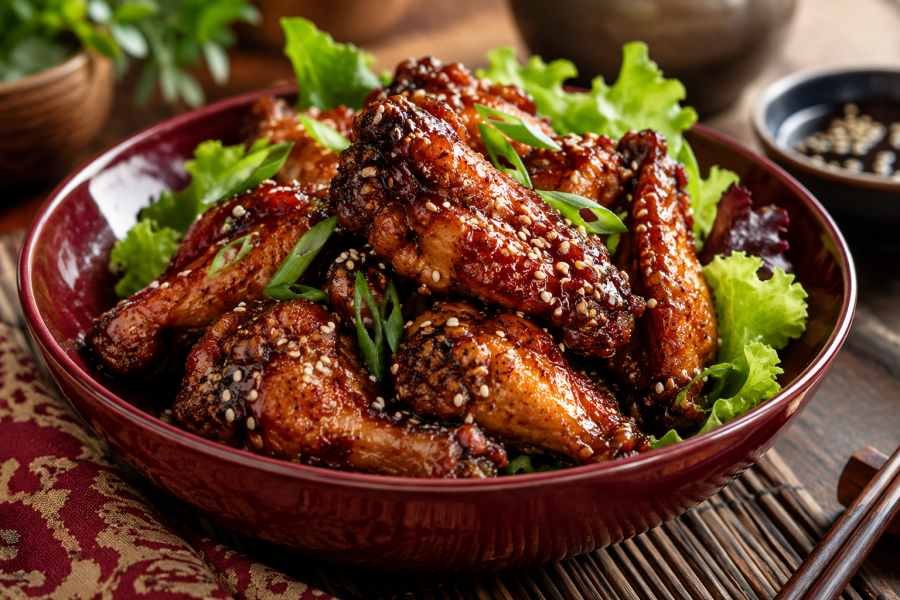
One of the easiest ways to experience the city is through Nagoya-meshi, the local term commonly used for Nagoya’s distinctive food culture.
Visitors can try specialties such as miso katsu, hitsumabushi, tebasaki and kishimen, among other dishes associated with the region.
Hitsumabushi, for example, is grilled eel served over rice with different accompaniments, while kishimen is a distinctive flat noodle traditionally served in broth. The Nagoya tourism authority specifically highlights both dishes in connection with the Atsuta area.
For travelers coming from overseas, these dishes provide a culinary experience that feels distinctly different from the more familiar food cultures of Tokyo or Osaka.
Food can also become part of the itinerary itself.
Instead of simply looking for the closest restaurant to the competition venue, travelers can deliberately explore a neighborhood, try a local specialty and then continue on to the next event.
Sometimes, a memorable trip is built as much around what you ate between competitions as the competition itself.
The Osu area is one of Nagoya’s most lively districts, combining shopping streets, restaurants, cafés, temples, specialty shops and a mixture of old and new urban culture.
It is particularly appealing for travelers who want something less formal than a traditional sightseeing itinerary.
You can wander without necessarily having a strict list of attractions to check off.
Spend an afternoon browsing shops, stop for something to eat, explore a temple, look for vintage items or simply observe the local street life.
The area can easily fill several hours without requiring a rigid itinerary.
Its mixture of traditional establishments and contemporary businesses also reflects one of Nagoya’s defining characteristics: a city where older cultural traditions and modern urban life exist side by side.
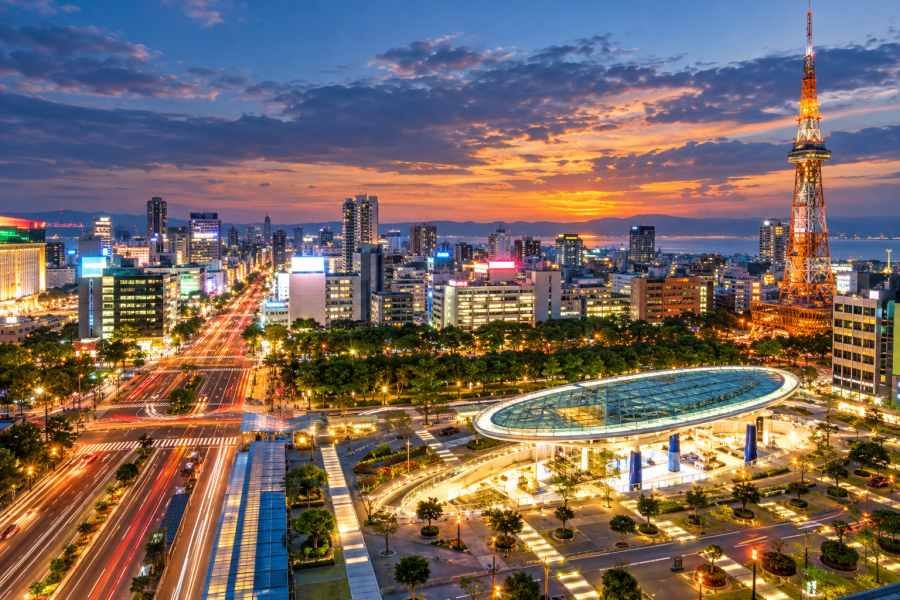
Sakae is another major destination for visitors, particularly after the day’s sporting events.
The district is known for shopping, restaurants, entertainment and illuminated city landmarks. Oasis 21 and Chubu Electric Power MIRAI TOWER are among the recognizable sights in the area.
For travelers staying in central Nagoya, Sakae can also become an easy evening destination.
You might finish watching a competition, return to the city, have dinner and then take a leisurely walk through the district.
It is the kind of place where the evening does not necessarily have to be planned down to the minute.
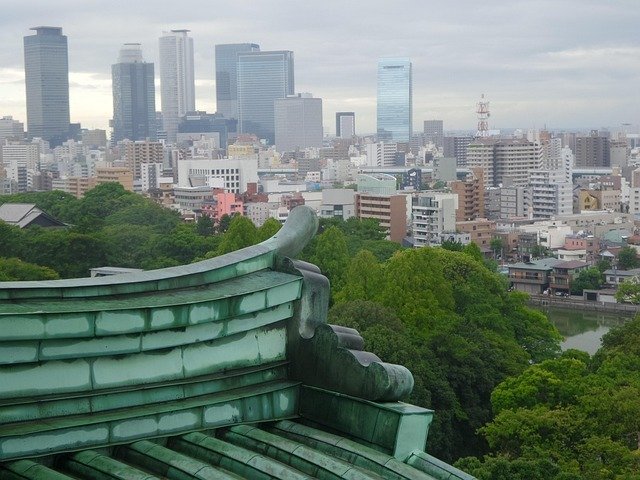
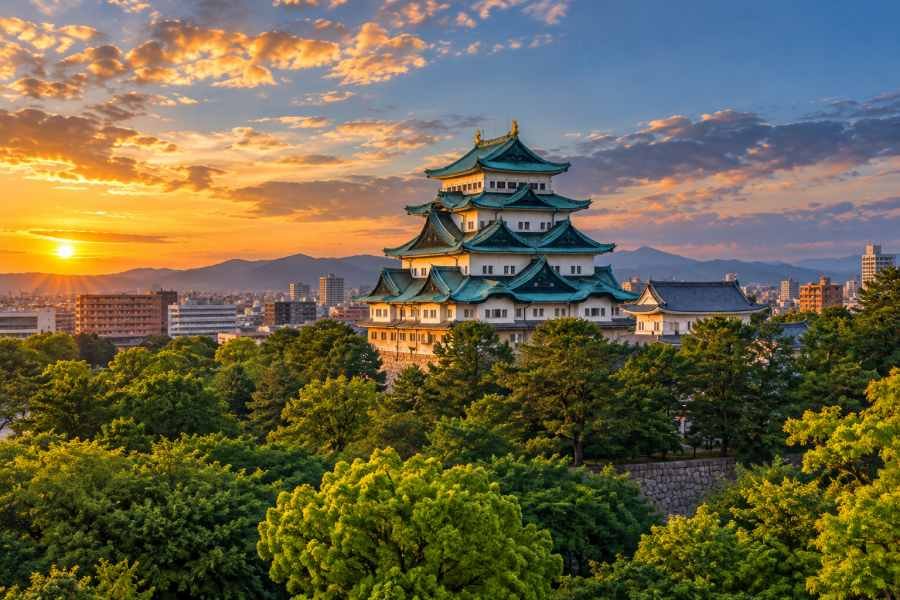
Nagoya’s modern identity is closely connected with Japan’s history.
The city and surrounding region are associated with three major figures of the Sengoku and early Edo periods: Oda Nobunaga, Toyotomi Hideyoshi and Tokugawa Ieyasu.
Visitors can explore this history through castles, museums, shrines and other cultural attractions throughout the region.
One particularly significant site is Atsuta Jingu, located in southern Nagoya.
The shrine is surrounded by a large forested area and has a history extending more than 1,900 years. It is associated with the legendary Kusanagi-no-Tsurugi, one of Japan’s Three Sacred Imperial Treasures.
For travelers who want a quieter experience between sporting events, a visit to Atsuta Jingu offers a very different atmosphere from the stadiums and busy competition venues.
Nagoya and the wider Aichi region are strongly associated with manufacturing and engineering.
The region’s industrial identity includes automotive manufacturing, aerospace, technology and precision industries.
This side of Aichi provides an interesting contrast to its temples, shopping streets and traditional food culture.
For visitors interested in technology, design and manufacturing, the region offers opportunities to see another side of Japan—one built around engineering and industry rather than only historic landmarks.
The Asian Games themselves also reinforce this contrast: modern sporting facilities and international events will operate alongside centuries-old cultural sites.
Because competition schedules and venue arrangements can change, travelers should avoid creating an itinerary that depends entirely on one event or venue.
The official organizers specifically advise visitors to check the latest information because schedules and venue-opening arrangements may change.
A practical approach is to divide the trip into three elements:
Choose the sporting events you most want to see.
Check the official schedule, venue, session time and transportation options before leaving for the event.
Leave time for neighborhoods, museums, historical sites, shopping and food.
Don’t make the mistake of spending the entire trip moving from one stadium to another without seeing the destination itself.
Keep at least part of each day open.
This allows for transportation delays, schedule changes, weather, unexpected discoveries or simply the possibility that you find a place you want to spend more time exploring.
The official Aichi-Nagoya 2026 website should remain the primary reference for competition schedules, venues and visitor information.
Traveling for the Asian Games will involve more than watching competitions. Moving between venues, walking around Nagoya, exploring neighborhoods, shopping and visiting cultural attractions can make for long and tiring days.
There will inevitably be moments when you simply want to return to your hotel room, put your feet up and enjoy some quiet time indoors rather than head back out.
For those interested in digital entertainment, demo slot and other online entertainment options may also be available, subject to the laws and age restrictions that apply in the user’s location.
For some travelers, these can provide a casual way to unwind in the privacy of their room before getting ready for another day of sightseeing and sporting events.
The important thing is to treat this as downtime rather than another item that needs to be squeezed into an already busy itinerary.
Aichi-Nagoya can also serve as a starting point for exploring destinations outside the city.
The Games themselves extend well beyond central Nagoya, with competition venues located in cities throughout Aichi, including Toyota, Okazaki, Toyohashi, Anjo, Kariya, Komaki, Tokoname and others.
That geographic spread can actually become an advantage for travelers.
If your competition ticket takes you to another part of Aichi, consider arriving early enough to explore the surrounding area rather than simply going to the venue and immediately returning to Nagoya.
For travelers staying longer, combining the Games with additional destinations can make the journey feel less like a single-event trip and more like a complete Japanese holiday.
One of the advantages of traveling independently is the freedom to change your plans.
You might discover a restaurant you want to try again.
You might find a shopping street that deserves more time.
You might decide that after several days of competitions, you don’t actually want another packed sightseeing schedule.
That’s okay.
A good travel itinerary should have enough structure to keep you organized but enough flexibility to allow the trip to develop naturally.
The Asian Games provide a schedule.
Your holiday doesn’t have to.
The Asian Games as the Beginning of the Trip
The best Asian Games travel experience does not necessarily end when the final event of the day is over.
A competition might introduce a visitor to a neighborhood.
A meal might lead to a new favorite dish.
A free afternoon might become an unexpected cultural discovery.
A train ride to a competition venue might take you through a part of Aichi you would never have otherwise visited.
That is part of the appeal of traveling for a major sporting event.
Aichi-Nagoya 2026 provides the occasion, but the city, the food, the history and the surrounding region can make the trip memorable long after the competition schedule has changed.
For visitors coming to Japan specifically for the Games, the goal does not have to be simply to say, “I watched the Asian Games.”
It can be:
“I watched the Asian Games—and I experienced Aichi-Nagoya.”
More Stories
Creative Bacolod ' Creative Bacolod: A New Reason to Travel, Explore and Fall in…
Mynt IPO Opens to Filipino Retail Investors Through GStocks PH Mynt IPO Opens to Filipino…
Create Custom Sticker Sheets to Boost Your Travelling Event Stickers have a way of turning…
Bacolod Public Plaza & NGC Fountain Redevelopment Bacolod Public Plaza & NGC Fountain Redevelopment: Did…
Experience MassKara 2026 Experience MassKara 2026: Where Bacolod’s Smile Reaches the World There is a…
What a Local Trekking Company Checks Before Sending a Group to Annapurna Base Camp Annapurna…