

Skipping Siquijor During Peak Season
When Paradise Gets Too Popular: Tourism Growth, Carrying Capacity, and Why I’m Skipping Siquijor During Peak Season (For Now)
Contents
There is an uncomfortable truth about tourism that many destinations eventually face: the very success of a place can quietly erode the experience that made people love it in the first place. When an island becomes too popular too quickly, the pressure rarely shows up in glossy travel brochures. It appears instead in long ferry lines, fully booked hotels, crowded attractions, and restaurants struggling to keep up with demand.
Siquijor—once celebrated as one of the Philippines’ quietest island escapes—may now be approaching that moment of transition.
Recent tourism data show just how rapidly the island’s popularity has grown. According to the Provincial Tourism Office, Siquijor recorded about 273,000 staying tourists in 2025, up from 241,529 visitors in 2024, reflecting the island’s increasing appeal among both domestic and international travelers.
🔗 https://pia.gov.ph/news/siquijor-tourism-notes-positive-growth-in-2025/
For a province long known for its laid-back charm, this growth signals both an economic opportunity and a planning challenge.


Tourists Versus the Island’s Population [ Skipping Siquijor During Peak Season ]
Siquijor is also one of the smallest provinces in the Philippines. Based on the 2020 census, the province has a population of around 103,395 residents.
🔗 https://www.philatlas.com/visayas/r07/siquijor.html
Placed side by side, the numbers tell an interesting story. With 273,000 visitors recorded in a single year, the island receives more than twice its resident population in tourist arrivals annually. While tourists do not arrive all at once, these numbers help explain why pressure on services becomes visible during peak travel periods such as Holy Week, long weekends, and the summer season.
For small island destinations, where land area, infrastructure, and utilities are inherently limited, tourism growth often raises an important planning question: how many visitors can the island comfortably accommodate without compromising the experience of both residents and travelers?
This concept is known in tourism planning as carrying capacity.

on board the ferry going to the Island
Gateway Pressure: The Island’s Ferry Bottleneck [ Skipping Siquijor During Peak Season ]
Unlike many major destinations with direct airports, Siquijor remains largely dependent on sea transport as its main tourism gateway. Ferries arriving from nearby hubs such as Dumaguete, Cebu, and Bohol serve as the primary entry point for visitors.
This reliance on maritime transport means visitor arrivals are often concentrated within limited ferry schedules. During peak travel periods, ferry seats sell out quickly, and the movement of vehicles onto the island becomes even more constrained.
Our own experience visiting Siquijor last year during Holy Week—one of the busiest travel periods of the year—illustrated this reality clearly.
We arrived in Dumaguete from Bacolod at around seven in the morning, hoping to catch an early ferry to the island. Instead, what greeted us was a scene that felt more like a transport terminal during a national holiday rush. The lines at the ticket counters were already long, and the waiting areas were filled with travelers carrying backpacks, luggage, and boxes of supplies for the long weekend.
Securing ferry tickets proved to be far more difficult than expected. The crowds were thick, the queues moved slowly, and each announcement of a departing trip seemed to trigger another wave of passengers rushing toward the counters. Travelers hoping to bring vehicles onto the island faced an even bigger challenge, as cargo slots were already limited and quickly filling up.
After several hours of waiting and repeated inquiries, it became clear that transporting our vehicle to the island would not be possible. We eventually decided to leave the vehicle in Dumaguete City and continue the journey as regular passengers.
By the time we finally secured seats on a ferry, most of the day had already passed. Our boat eventually departed sometime between four and five in the afternoon, long after the early trips had already sailed. The crossing itself was calm, but the delay meant that night had already fallen by the time we reached the island.
It was already dark when we arrived in Siquijor, a quiet contrast to the long, crowded day that began at the Dumaguete port earlier that morning.
The experience offered an early glimpse of how the island’s popularity—especially during peak seasons—can place considerable pressure on its primary transport gateway.
![[ Skipping Siquijor During Peak Season ]](https://thehappytrip.com/wp-content/uploads/2026/03/IMG_3999.jpg)
A Holy Week Visit: When Tourism Demand Meets Service Capacity [ Skipping Siquijor During Peak Season ]
Accommodation was the next challenge.
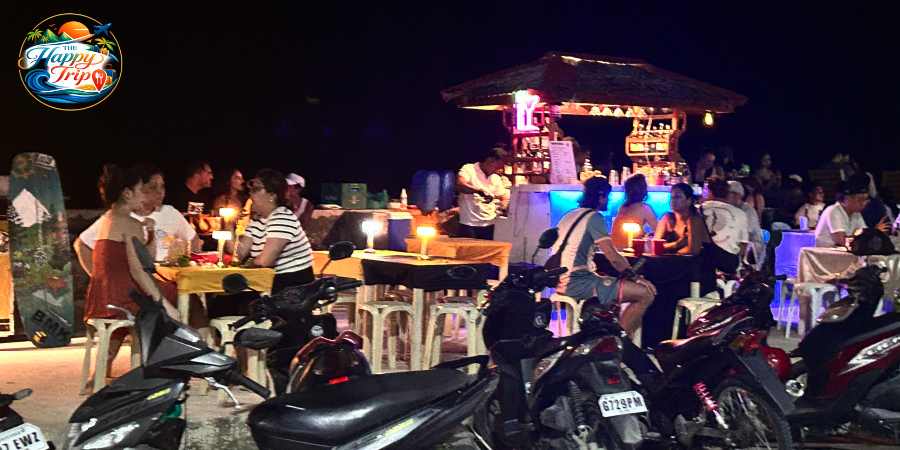
The room we managed to secure was in a relatively new hotel or inn, but the space assigned to us was actually a converted function room temporarily used as guest accommodation. Inside were double-deck beds. While the room was air-conditioned and comfortable enough for the night, the glass doors facing the road were simply covered with curtains for privacy.
Still, we were fortunate. Throughout the evening we noticed several travelers arriving without confirmed accommodations. Some were reportedly offered tents as alternatives. Others continued searching around town for available rooms.
Restaurants were equally overwhelmed. At one establishment where we had dinner, it took nearly an hour before our meals were served. The delay was understandable: the small team of kitchen and service staff was simply struggling to keep up with the surge of diners. Even serving drinking water became difficult with so many tables to attend to.
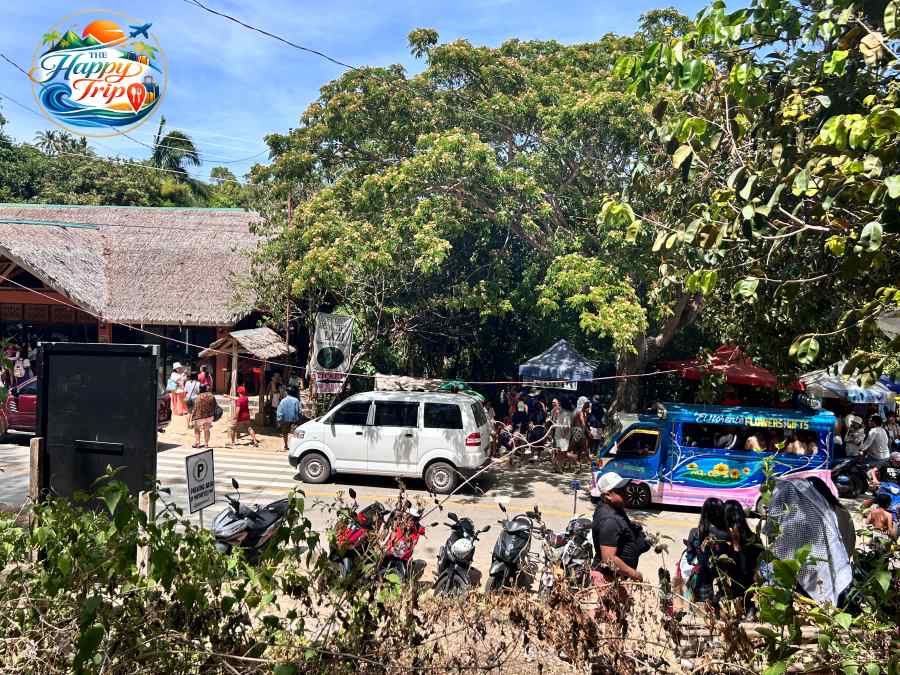
Across the island’s tourist attractions, the situation was similar. Parking areas were packed, viewing decks crowded, and long lines of visitors filled walkways and staircases. In many places, we chose to simply pass by the attractions rather than join the congestion.
For travelers who had visited Siquijor years earlier, the difference was unmistakable. The island that once felt quiet and spacious was now experiencing the unmistakable growing pains of popularity.
Tourism’s Economic Benefits for the Island [ Skipping Siquijor During Peak Season ]
To be fair, tourism growth has brought real economic benefits to the province.
Local development reports indicate that tourism revenues could reach around ₱300 million, reflecting the sector’s increasing contribution to the local economy.
🔗 https://pia.gov.ph/news/siquijor-tops-regl-growth-tourism-infra-devt-drive-local-economy/
Tourism has also helped stimulate a wide range of small businesses—from resorts and guesthouses to transport services, restaurants, dive operators, and souvenir shops. According to development reports, about 90 percent of new jobs generated by tourism and infrastructure projects are expected to benefit local residents, highlighting how tourism can improve livelihoods within small island communities.
🔗 https://pia.gov.ph/news/siquijor-tops-regl-growth-tourism-infra-devt-drive-local-economy/
In this sense, the island’s tourism boom is something many residents understandably welcome.

When Growth Outpaces Infrastructure [ Skipping Siquijor During Peak Season ]
Yet tourism experts often emphasize that growth must be matched with infrastructure readiness and service capacity.
Reports indicate that hotel and resort occupancy rates in Siquijor can reach 95 to 100 percent during peak seasons, suggesting that tourism demand is frequently pushing accommodation capacity to its limits.
🔗 https://pia.gov.ph/news/visayas/cv-visayas/siquijor-island-philippines-next-big-tourism-hotspot/
This does not necessarily mean the island is already suffering from overtourism. But it does suggest that tourism demand may be approaching the limits of the island’s current capacity, particularly during high-season travel periods.
The Missing Conversation: Carrying Capacity [ Skipping Siquijor During Peak Season ]
Interestingly, while visitor numbers continue to rise, there is still no widely publicized official tourism carrying-capacity framework for Siquijor.
Carrying capacity refers to the maximum number of visitors a destination can accommodate without negatively affecting the environment, infrastructure, local communities, and the visitor experience itself.
For emerging destinations experiencing rapid tourism growth, defining such limits—or at least monitoring them—can help guide future planning.
Lessons from Boracay’s Experience
The Philippines has already seen how unmanaged tourism growth can strain a destination.
In Boracay, authorities temporarily closed the island in 2018 for environmental rehabilitation after tourism pressure exceeded infrastructure capacity. When the island reopened, stricter visitor management measures were implemented, including requirements for confirmed hotel bookings before entry and tighter regulations on development.
While Siquijor remains far from Boracay’s scale of tourism intensity, the experience offers a valuable lesson: tourism success requires active management.

Siquijor 2015
![[ Skipping Siquijor During Peak Season ]](https://thehappytrip.com/wp-content/uploads/2026/03/IMG_3968.jpg)
Siquijor 2025
A Traveler’s Reflection
Our visit to Siquijor left us with mixed emotions. On one hand, it was encouraging to see the island thriving and attracting visitors from across the country and beyond. Tourism clearly brings opportunities for local entrepreneurs and communities.
But from the perspective of a traveler seeking a relaxing island escape, the experience was not quite what we had hoped for. The crowds, long waits, and difficulty accessing services made the trip feel more stressful than restful.
Siquijor remains a beautiful island, and its popularity is well deserved. Yet the experience also reminded us that even paradise can feel different when visitor numbers begin to stretch the limits of infrastructure and service capacity.
And so, for now, we have made a simple personal decision: we will skip visiting Siquijor during peak season.
Not because the island has lost its charm—but because destinations, like communities, sometimes need time to adjust to their own success.
Perhaps with thoughtful planning, improved infrastructure, and balanced tourism management, the Siquijor many travelers fell in love with—the peaceful island of quiet roads, uncrowded waterfalls, and relaxed evenings—will remain intact.
Until then, we will gladly return someday. Just not during peak season.
![[ Skipping Siquijor During Peak Season ]](https://thehappytrip.com/wp-content/uploads/2026/03/IMG_3930.jpg)
Skipping Siquijor During Peak Season
More Stories
- SUNKEN CEMETERY, CAMIGUIN ISLAND TRAVEL GUIDE
- SIARGAO RESORTS AND HOTELS
- BEST CARIBBEAN ISLANDS TO VISIT
- TUASAN FALLS TRAVEL GUIDE | CAMIGUIN
- Philippine Tourism : Why Small Cities Are the Future
- PHILIPPINE HOLIDAYS + THINGS TO DO
- VISAYAS TOURIST SPOTS (PHILIPPINES)
- DUMAGUETE TO SIQUIJOR ITINERARY, BUDGET
- Top 5 Must-Visit Places in the Philippines During Winter
- Philippine Overtourism : Crowded Destinations, Alternative Places
- Philippine Tourism : Why Small Cities Are the Future
- Bacolod During Summer: Bacolodnon’s Guide to What to Do
- Golden Week : What It Means for Tourists Planning a China Trip
- Road Trip Safety Advice for First-Timers
