
What a Local Trekking Company Checks Before Sending a Group to Annapurna Base Camp
Contents
Annapurna Base Camp Trekking is a journey that takes trekkers through the region, giving a glimpse of culture, people, flora, and fauna.
While this region’s beauty cannot be explained in words, there’s also another side of the coin that is unpredictability it offers.
Trekkers heading to the base camp should choose a local trekking company that includes them in a group. The group isn’t just departed for the trek out of guesswork.
From the Himalayan Masters point of view, this article will explain what we check before sending a group to the base camp.

Trail Checking
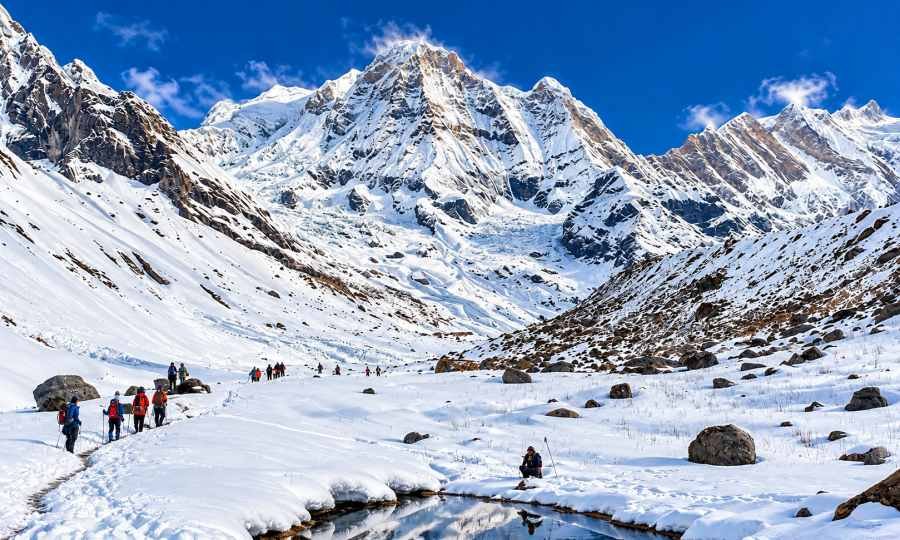
There are numerous starting points of the Annapurna Base Camp trail: Jhinu, Ghandruk, Ulleri, and Dhampus. These are the easy locations to get to via jeep, bus, or bike.
After reaching the starting point, there are marked and fixed trails that take trekkers to the Base Camp.
Sometimes, these very essential trails are damaged by heavy rain, landslides, or poor trail maintenance.
Before departing any group to trek on these trails, road access, wooden and suspension bridges, and other parts of the trail are checked thoroughly by reaching out directly to locals.
The local authority is contacted for the latest condition of the trail, or the field visitors are sent to check the condition of the trail.
Weather
The weather is the most unpredictable in the mountains. One moment, it is a sunny day with no clouds over your head and the next moment it’s dark with heavy rain or snow halting the trek.
Instead of bearing the loss of halting the trek or calling it off mid-trail, local and experienced companies like us check the weather in advance.
The weather data for trekking days is carefully reviewed before making any decisions about the departure.
Different weather forecasting channels or websites are used. Still, there’s always a chance of sudden weather changes, which is also handled while ensuring the safety and well-being of trekkers.
Planning the Overnight Stops
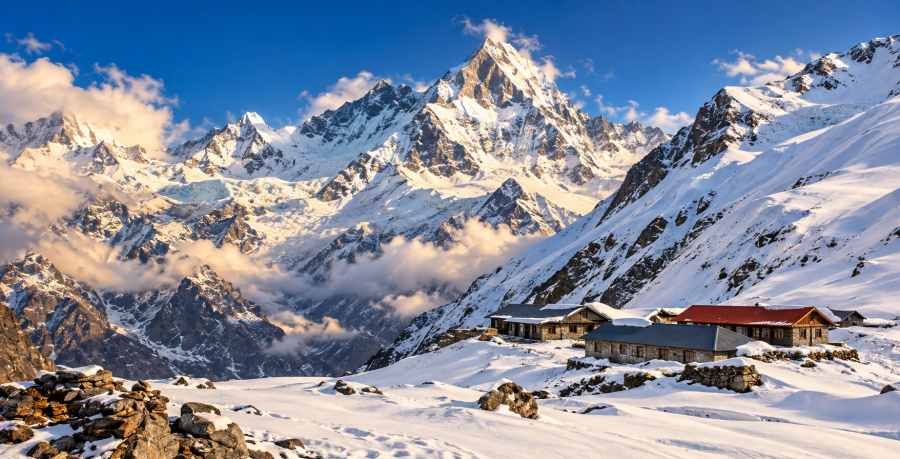
Teahouses along the Annapurna Base Camp trail are an important part of the trail. Trekkers use them to shelter, rest, recover, fuel up, and plan for the next day.
During the peak trekking season, these teahouses fill up quickly, and accommodation can be hard to find.
But local companies like Himalayan Masters check the teahouse availability and book spaces for their trekkers in advance.
While the varieties in the teahouse menus can be limited depending on the remoteness, the accommodation is always arranged, which is decently comfortable, warm, and clean for the tired trekkers.
Understanding the Group
There can be numerous people in the group with different preferences, fitness levels, allergies, and health conditions.
It would be unfair to put everyone at the same level in terms of fitness, health, and personal preferences.
A briefing session is held a day before departure towards the trailhead. In this briefing, the itinerary, what to expect, and paperwork are discussed and completed. The purpose of the meeting is to get to know the trekker individually.
Checking if they have prior high-altitude trekking experience, how often they work out, whether they have any food allergies or any prevailing health conditions, and if they have insurance to cover in case of emergency.
These details help with planning at the company’s end. A guide is informed to keep in mind the conditions of each trekker and treat them with special care throughout the trek.
Planning for Acclimatisation
The best way to judge a company for the Annapurna Base Camp trek is to look at how they plan acclimatisation, and this is where Himalayan Masters stands out.
Trekkers are guided through proper acclimatisation practices before and during the trek. The itinerary sets aside specific rest days so trekkers adjust properly before hitting the high-altitude base camp.
This acclimatisation period lets the body get used to thinner air and lower oxygen levels, reducing the risk of altitude sickness.
Work that Makes a Trek Run Smoothly
Most trekkers notice the obvious parts of a trip: the mountain views, villages, suspension bridges, forests, and the arrival at Annapurna Base Camp. What they may not notice is the preparation happening before and during the trek.
Planning the route, monitoring the weather, understanding the group, confirming accommodation, preparing for altitude, and making small adjustments during the journey are all part of organising a responsible mountain trip.
Good preparation does not remove every uncertainty from the mountains. It simply means the group starts the trek with a better understanding of what lies ahead and a team ready to respond when conditions change.
More Stories
- MEKONG DELTA | Unveiling Vietnam’s Serene Waterworld
- Four-Day Itinerary for Hanoi + Halong Bay, and Ninh Binh
- RAU RAM CAFE:A Vietnamese Culinary Adventure
- St. Joseph’s Cathedral ,Hanoi ,Vietnam: A Dual Encounter with History
- Tomongtong Mangrove Eco-Trail | Tourist Spot in EB Magalona
- Vietnamese Egg Coffee at Cafe Giang | Hanoi, Vietnam
- SamgyupTa Korean Restaurant Review | Silay City
- Beyond the Stadium: A Travel and Leisure Guide to Aichi-Nagoya During the 2026 Asian Games
- Anyag Leisure Farm & Resort | Granada, Bacolod: A Review
- Bacolod Hotels on Tripadvisor: What Travelers Really Say
- How to Turn Travel Photos into Cinematic Video Stories
- Bacolod Tourism Beyond
